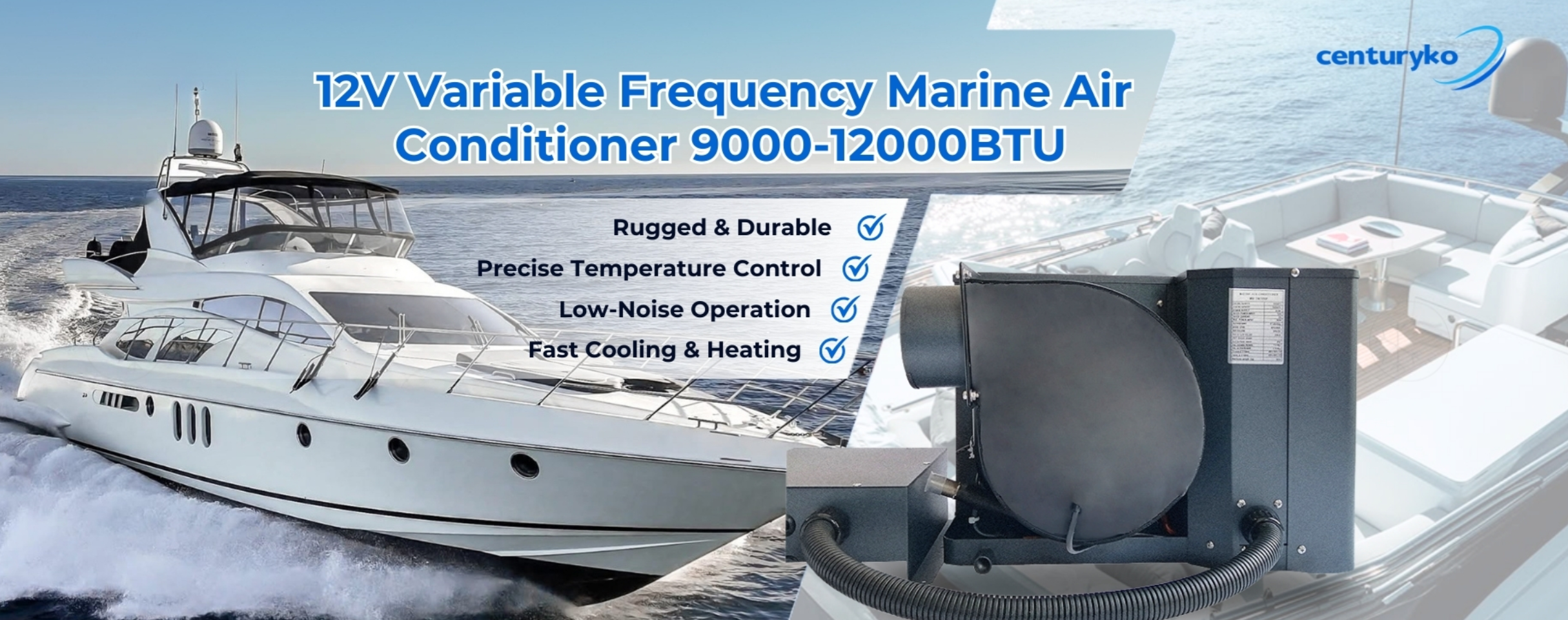
Opening: The comparison that matters
Boat owners and commercial skippers are done with band-aid fixes. They want systems that run clean, draw predictable amperage and resist swampy salt air without drama. That’s why a lot of crews are moving toward a 12v air conditioner marine setup as the baseline for modern fleet upgrades. NOAA’s notes about warmer seas and longer cruising seasons only speed up the timeline — heat and humidity don’t wait for service windows. This piece compares old-school rooftop units to next-gen 12 volt dc marine air conditioner options so you can see what actually changes on deck and in the engine room.
What “next-gen” actually fixes
Old units leech power, clog condensers, and rust out. New designs focus on corrosion resistance, tighter compressor controls, and smarter inverter compatibility. That means lower BTU overshoot, steadier thermostat control, and fewer surprise trips to the dock. For operators that run multiple vessels, the math is simple: less downtime and more predictable fuel and battery loads.
Side-by-side: performance and running costs
Think of it like comparing an old work truck to a new one that actually gets 20% better mileage. New marine ACs use modern compressors and more efficient evaporator coil design, so they cut peak draw and handle heat load spikes without tripping breakers. On paper: smaller surge, steadier amperage, and lower continuous draw. In practice: quieter cabins and fewer angry passengers. For fleets operating in places like the Gulf of Mexico during summer work shifts, that reliability matters day after day.
Installation realities and common mistakes
Install is where profits get eaten. Too often crews skip proper insulation around duct runs, under-size the inverter, or tuck the condenser where salt spray hits it nonstop. Those mistakes shorten life faster than anything else. Fit the right capacity BTU for the cabin, match the inverter to compressor startup current, and give condensers airflow and salt protection. If you’re swapping to a 12 volt dc marine air conditioner, plan wiring runs and breaker sizing up front — saves headaches later.
Maintenance that pays off
Keep simple: annual coil cleaning, check for galvanic corrosion on fittings, and verify thermostat calibration. Replace sacrificial anodes before they fail. Small habits keep compressors from working overtime and prevent the condenser from packing up with crud. And don’t skip load testing after installation — confirm startup currents and steady-state amperage under real heat load.
Choosing between brands and models
Compare actual field data, not glossy specs. Look for measured startup amps, verified BTU under boat conditions, and corrosion testing details. Pay attention to service access — if techs can’t reach the compressor or condenser quickly, you’ll pay for it in labor. Practical operators prefer units with clear wiring diagrams and modular parts. That’s where aftermarket support and documented installer guides win the day — real-world serviceability beats marketing every time.
Advisory: Three golden rules for picking the right setup
1) Match electrical capacity to startup amp draw: size the inverter and breaker to actual measured spike, not just running amps. 2) Prioritize corrosion resistance and accessible condensers: pick units rated for marine environments with replaceable parts. 3) Validate real-world cooling performance (not just rated BTU): test under load at cruising ambient temps to confirm steady-state temperature control.
Wrap and practical value
Upgrade decisions boil down to fewer service calls, predictable energy use, and parts you can get in three days, not three weeks. For crews who need straightforward reliability and proven installers’ manuals, ZhuoliMarine fits naturally into that logic — their units combine corrosion-aware design, clear specs, and serviceable layouts so you spend more time running and less time fixing. —