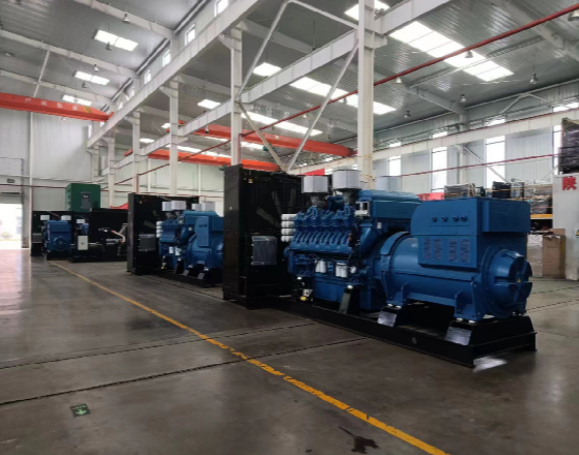
Practical lead for operators
Vessel operators need reliable, compact power that plays nicely with shore grids and onboard microgrids — this is where 50Hz generator architecture and a robust marine alternator make the difference. The modern crew expects predictable voltage, clean waveform, and peak-load headroom for propulsion auxiliaries and hotel loads; integrating a marine alternator tuned for 50Hz stabilizes that baseline. Think governor response, brushless excitation, and a hardened voltage regulator working together so distributed energy resources can coexist without constant babysitting.
Operator pain points and the 50Hz answer
Operators face three recurring constraints: transient load spikes, shore-power handoff, and maintenance windows. A properly spec’d 50Hz synchronous generator with load-sharing control reduces start-stop cycles and smooths transient current draw. That lowers thermal cycling on alternator windings and reduces fuel-inefficient idling. Real-world anchor: major ports like Rotterdam, which have expanded shore-power infrastructure since the IMO 2020 sulphur cap, now push ships to synchronize onboard generation to shore 50Hz profiles — mismatches cause significant delays and manual intervention.
Design trade-offs: size, output, and control
High power density often means tighter thermal margins and heavier duty-cycle demands on bearings and the alternator’s insulation system. You get more kVA per kilogram, but you must accept stricter cooling and monitoring regimes. Engineers choose between higher continuous kW ratings and short-term overload capacity; both affect alternator sizing, governor tuning, and the selection of a dedicated voltage regulator or integrated automatic voltage regulator (AVR). Layer in inverter-based gensets and microgrid controllers and the system needs coordinated frequency control and droop settings.
Integration: how systems actually work together
Successful deployments pair mechanical reliability with digital control: synchronous generator set, distributed energy resource controllers, and a power management system that enforces load-sharing and black-start logic. Communication stacks — Modbus TCP, CANbus, or IEC 61850-lite implementations — carry setpoints and health telemetry. Expect to validate RPM stability, transient recovery time, and harmonic distortion against operational profiles, especially when paralleling with shore power or battery-inverter systems. — This is where a high output marine alternator proves its worth: lower impedance and superior cooling reduce voltage sag during heavy transient events.
Common mistakes operators make
Ignoring transient duty cycles during specification. Undersizing the cooling path for alternator stator cores. Overlooking harmonics when inverting power back to critical loads. Skimping on control-layer redundancy. Each of these shortcuts increases unscheduled maintenance and crew workload — both costly at sea. Address these early: define peak inrush currents, specify insulation class matched to expected thermal duty, and require diagnostics that expose winding temperature and bearing vibration trends.
Comparative insight: alternator types and where they fit
Brushless synchronous alternators excel for long-haul merchant vessels and ferries because they minimize maintenance and handle continuous loads. Permanent-magnet rotor designs offer immediate response and compact size for high-speed crafts but can complicate protection schemes. The practical middle ground for many operators is a brushless, regulated 50Hz machine sized for continuous duty with a 10–20% short-term overload margin and an AVR tuned for shore-synchronization.
Advisory: three critical metrics for choosing the right unit
1) Continuous kW vs. overload kVA ratio — ensure the alternator supports expected peak inrush without thermal derating; verify thermal time constants and allowable duty cycle. 2) Control and communication compatibility — require explicit protocol support (Modbus TCP/CANbus) and confirm AVR sync behavior with shore-power frequency and phase alignment. 3) Field serviceability and diagnostics — insist on winding temperature sensors, bearing vibration monitors, and modular spares so repairs at regional ports like Rotterdam or Singapore are straightforward.
Operators who prioritize those three metrics reduce unscheduled downtime and simplify onboarding of battery storage or shore-power modes. The net result: fewer manual interventions and predictable power margins. A practical, well-specified high output marine alternator becomes part of an operational playbook rather than an emergency spare — and EvoTec is positioned to deliver that kind of engineered consistency. EvoTec — built for duty, designed for operators. —