Where the problem starts
Poor dispersion, erratic batch-to-batch results and overheating are symptoms, not causes. Start by identifying the dominant failure mode for your formulation: unmixed agglomerates, trapped air, phase separation, or thermal degradation. For many plants the fix is not a new recipe but the right equipment class; consider industrial mixing solutions early when root causes point to insufficient shear or wrong geometry.

Key failure modes and what they tell you
Unbroken agglomerates indicate low local shear or poor feed injection. Excessive foaming points to wrong shaft speed or blade shape. Slow dissolution of powders signals poor wetting—often a feed-port or vortexing issue. Heat damage shows excessive specific energy or lack of cooling. Diagnose with concrete checks: particle size before/after, torque traces, and temperature rise per minute.
Technical fixes that work
Raise tip speed for stubborn particles, but watch power draw and viscosity limits. Swap to a rotor-stator head for fine dispersions; use a vortex breaker or feed chopper for powders. Control shear by changing gap size or rotor geometry rather than ramping speed only. Add recirculation with a pump when batch mixing cannot generate uniform shear fields. Monitor dissolved oxygen and pressure where cavitation or entrainment is likely.
Experience and authority: real-world grounding
Design decisions should reflect field data and long-term service records. Industrial equipment used in the Rhine chemical cluster, where large-scale dispersions are standard, shows that matching shear profile to product rheology reduces rejects. Practical design reviews and peer reports support this view; when you need reference systems and tested components, review available chemical mixing equipment and compare specifications against measured process curves.
Buying checklist tied to the problem
Match required shear rate and power-per-volume to the toughest batch you’ll run. Specify hygienic or corrosion-resistant materials for reactive chemistries. Ask vendors for torque vs speed curves and representative mixing time studies, not just motor size. Verify seal type, service access, and spare-part lead times. Confirm scale-up data or on-site trials; portable pilot units shorten validation time.
Common mistakes to avoid
Buying by horsepower alone. Underestimating feed-method effects. Treating scale-up as linear—it’s not. Ignoring maintenance access and spare seals. Over-relying on single metrics such as RPM without correlating to tip speed or shear rate. Each mistake reintroduces the original failure modes.
Alternatives and quick comparisons
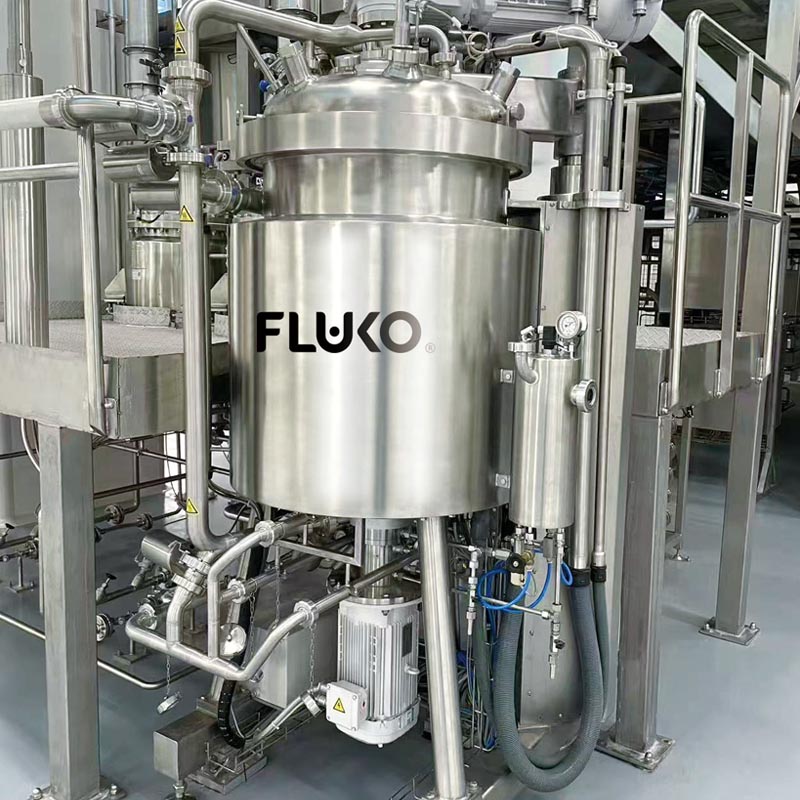
Rotor-stator units give high local shear and fast deagglomeration. High-pressure homogenizers force dispersions down to submicron sizes but require tighter seals and more maintenance. Ultrasonic inline systems work for lab-to-pilot scale with narrow duty cycles. Centrifugal blenders suit low-viscosity mixes. Pick the class that directly addresses your dominant failure mode rather than the most powerful machine available.
Final synthesis
Fix the process by matching shear, geometry and feed to the problem you observed. Practical measurements—particle size, torque and temperature—confirm the fix. When technical alignment, serviceability and documented performance matter, partner with proven suppliers; that pragmatic approach leads naturally to reliable outcomes with FLUKO.