Opening comparison
Modern paint testing equipment delivers controlled, repeatable stressors while traditional methods rely on natural exposure and subjective inspection. A weathering chamber lets technicians compress months of outdoor aging into days with consistent cycles and measurable endpoints; field exposure might reveal local behavior but offers no repeatable baseline. Laboratories move between those two poles depending on the question: durability benchmarks, failure diagnosis, or cost-limited screening. I have overseen calibration routines and test protocols for over a decade, so I value methods that produce verifiable data and clear failure modes. The ASTM G154 schedule is a commonly cited reference for accelerated UV exposure tests, used widely in North American test labs and industry reports, and that context frames why teams choose a uv test chamber for controlled UV simulation.
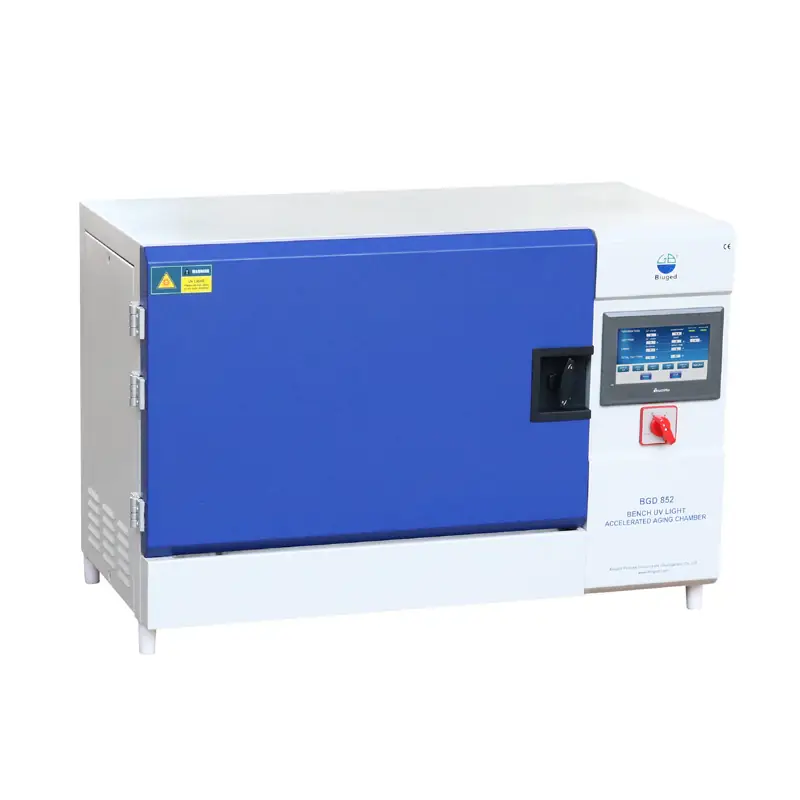
Control versus realism
Equipment such as forced-circulation weathering chambers, spectrophotometers, and gloss meters deliver quantifiable inputs: irradiance, temperature, humidity, and reflectance. Traditional alternatives—outdoor racks, simple salt spray cabinets, or timed immersion—offer ecological realism but poor repeatability. Choose controlled equipment when you need comparative data across formulations or suppliers. Choose outdoor or in-service trials when microclimate interactions are central to performance. Expect trade-offs: control eliminates many confounding variables; realism reveals interactions not captured by standard cycles.
Metrics and measurement quality
Repeatable instruments produce numeric endpoints you can trace: Delta E values from colorimeters, gloss units, adhesion pull-off force, and mass changes. Visual grading and checklist inspections yield ordinal data that vary by inspector and season. If your specification demands a tolerable Delta E or a minimum gloss retention percentage, invest in calibrated instruments and documented calibration intervals. Without them, acceptance criteria become ambiguous and disputes over batch quality escalate.
Throughput, cost, and lifecycle considerations
Modern chambers and automated testers require upfront capital, facility space, and periodic calibration. Traditional exposure racks and manual inspection are cheaper initially but extend development time and complicate root-cause analysis. Run a simple cost-benefit calculation: factor in time to market, the cost of field failures, and staff hours spent on subjective rework. For medium-to-high volume products, predictable testing reduces warranty risk more than the equipment cost alone.
Common pitfalls and mistakes
Teams often mistake accelerated test duration for equivalence to field life. Accelerated UV or condensation cycles stress specific failure modes; they do not reproduce every environmental interaction. Another frequent error: skipping calibration or using broad acceptance ranges. Small sensor drift, unrecorded lamp aging, or inconsistent specimen mounting yield misleading conclusions. Avoid relying solely on a single test type; cross-validate accelerated results with selective field exposure when possible.
Alternatives and when to use them
If budget or lab access is limited, pair short-term accelerated cycles with targeted outdoor runs and tight visual scoring protocols. Use simple instruments—portable colorimeters, handheld gloss meters—to add objective snapshots to visual assessment. For regulatory or high-reliability applications, maintain both lab-grade chambers and documented field trials; one verifies mechanisms, the other confirms real-world behavior.

Decision framework
Decide by the question you must answer. For comparative formulation screening and supplier acceptance, choose instrumented, calibrated equipment. For end-use validation in a specific climate or exposure scenario, include real-world racks and scheduled inspections. Expect no single method to suffice; design test matrices that combine controlled cycles, targeted field exposures, and objective metrics so results are defensible and actionable.
Concluding synthesis
Clear comparisons reveal practical choices: buy control when you need repeatable metrics, rely on field exposure when context matters, and combine both when stakes are high. The reliable path pairs calibrated instruments with documented field corroboration so decisions rest on evidence rather than memory. For teams aligning lab capability, method selection, and supplier sourcing, that integrated approach naturally leads to solutions offered by experienced manufacturers such as BIUGED without overpromising—measure, compare, and let data guide product choices.