Introduction — defining the risk and the signal
I like to start by breaking things down: a double-spindle setup pairs two spindles so you can machine both ends or run parallel operations. The double spindle CNC machine appears in shops promising higher throughput and fewer setups, yet performance often diverges from that promise. Recent shop-floor audits show cycle time variance as high as 22% on multi-op runs (simple stats, but telling). So: are you truly gaining efficiency, or trading one bottleneck for another?
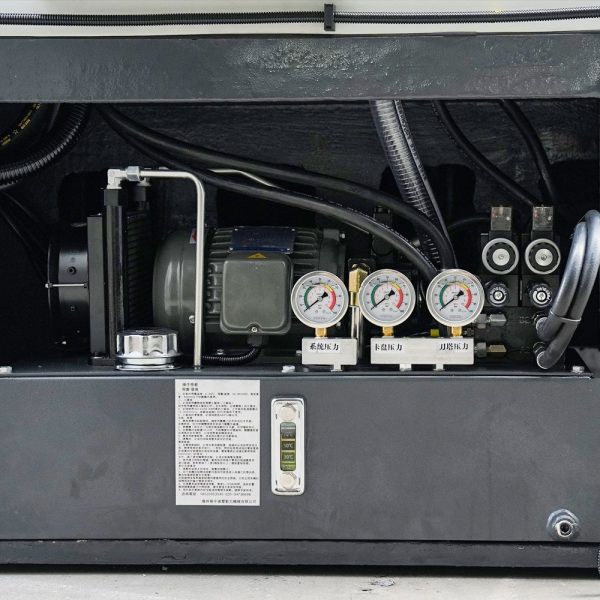
My concern is practical. I’ve seen control glitches where edge computing nodes can’t keep up with real-time spindle commands, and power converters that heat under sustained loads — issues that hide behind good-looking takt times. I ask these questions aloud because they matter on the floor: what failure modes have you not measured? How will you spot them before a costly downtime? — funny how that works, right? Let’s move into what usually breaks first and why that matters.
Part 2 — Why traditional fixes fail
double spindle lathe systems look robust on paper, but I will say this plainly: most legacy remedies miss the real pain. Shops add one more coolant pump, a bigger chip conveyor, or tweak spindle speed curves and expect throughput to scale linearly. It rarely does. Look, it’s simpler than you think — the root is often synchronization and toolpath handoff, not just horsepower. When live tooling and turret indexing don’t coordinate, you get scrap, repeated clamps, and wasted cycle time.
What exactly breaks?
First, control timing: servos on the Y-axis and tool changers must share precise timing windows. If the PLC or motion controller lags, you see micro-stops that ruin surface finish. Second, thermal drift in spindles and power converters changes tolerances across long runs. Third, operator visibility: dashboards rarely show latency between spindles and downstream fixtures. Those are hidden pain points. I’ve walked floors where everyone blamed the tool, when the real culprit was an I/O bus saturated by auxiliary sensors. We fix symptoms and not systems — and that’s the main flaw in most traditional solutions.
Part 3 — Future outlook: principles and measurable moves
Switching to a forward-looking frame, I want to focus on new technology principles that actually reduce those failure modes. First: deterministic control loops — reduce jitter by isolating motion control onto dedicated edge computing nodes or real-time Ethernet segments. Second: thermal management plus predictive calibration — track spindle temperature and adjust offsets before parts go out of tolerance. Third: integrated diagnostics — live telemetry that ties spindle speed, torque, and chip load to part quality. I’m not pitching a fantasy; I’ve seen these principles cut rework in half on a few pilot lines.
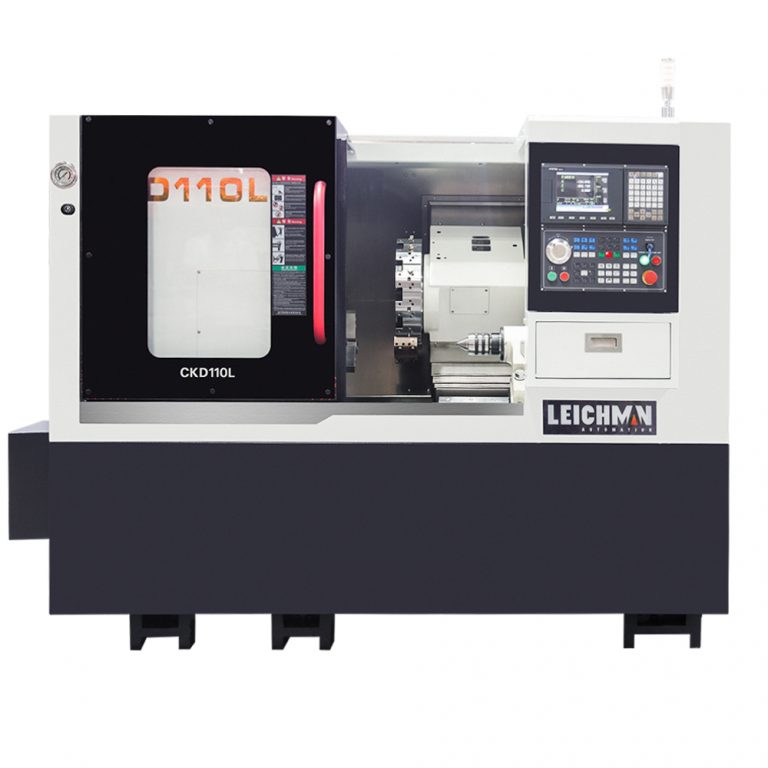
What’s Next?
For shops that plan to evaluate suppliers, talk to cnc milling manufacturers who can demonstrate synchronized dual-spindle runs under load (and ask for live telemetry logs). Compare suppliers not by top-end RPMs alone but by how they handle sustained duty—servo torque curves, control bus latency, and the ability to update tool offsets on the fly. There’s a short list of features that move the needle. Remember: better data beats brighter lights every time. — and yes, that means investing a bit more in controls and software up front.
Conclusion — how I would evaluate your next move
I’ll be direct: don’t buy a double-spindle machine because the spec sheet looks good. Evaluate decisions by metrics that reflect real shop life. Here are three I use and recommend: 1) Synchronization latency (ms) between spindles and turret actions; 2) Thermal drift allowance (microns over an 8-hour run); 3) Mean time to detect and correct a toolpath deviation using on-board diagnostics. Test these in a pilot run, with live parts, under your common fixtures.
We should also weigh ease of service and supplier responsiveness. I judge vendors by their willingness to share diagnostic access and to walk a shop trial with me. That tells me more than glossy brochures. If you want a sensible starting point, ask for a controlled demo from suppliers and insist on recorded runs that prove sustained performance. I’ve learned to trust data more than arguments — and you should, too.
For further reference and supplier trials, consider checking Leichman for demonstrable examples and machine data: Leichman.