Introduction
Have you ever paused and asked why a noisy machine still can’t give you clean, safe air? I ask that because I’ve watched small shops and large labs wrestle with the same problem. A laser fume extractor sits at the center of those scenes—quiet, humming, and often taken for granted—yet injuries and complaints still happen (and numbers back it up). Recent industry data show elevated VOC and particulate spikes in 20–30% of routine cutting sessions where extraction was assumed adequate. So what are we missing?
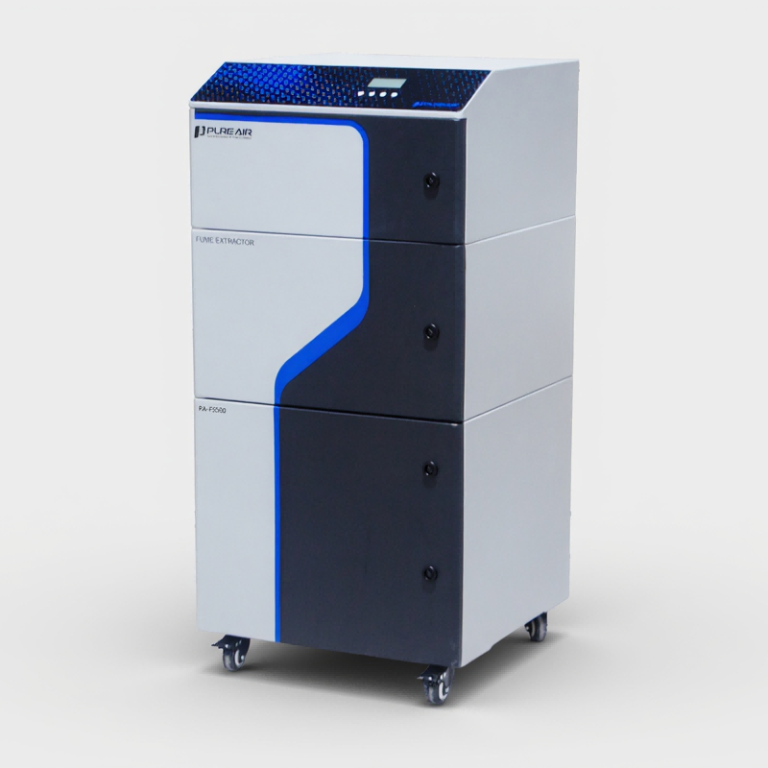
I want to share a thoughtful view rather than a sales pitch. We’ll look at what the numbers really mean, where design and use break down, and what practical moves you can make next. Follow me — there’s more below that shifts from why things fail to how to fix them.
Why Traditional Systems Fall Short
Let’s be direct: many shops rely on old assumptions. When I examine a shop’s setup, I often find a mismatch between stated capacity and real performance. Even a well-rated CO2 laser fume purifier can underperform if airflow rate is wrong, the HEPA filter is clogged, or the capture hood sits too far from the source. I’ve tested units where the rated cubic feet per minute (CFM) didn’t translate to effective capture—dust and VOCs still escaped. That gap matters. It means exposure continues despite “protection.”
Technically speaking, filtration efficiency drops when particulate loading increases and activated carbon beds saturate. Power converters and fan curves also age; the motor might be running but the static pressure no longer pulls smoke at the needed velocity. I’ll be frank: many of these faults are avoidable with better fit and routine checks. Look, it’s simpler than you think—maintain the right hood geometry, monitor the differential pressure, and replace media on schedule. Small steps. Big difference. — funny how that works, right?
Common failure mode?
Principles Behind Next-Gen CO2 Fume Purifiers
Now let’s look forward. New systems don’t just add more filters; they rethink flow, sensing, and control. A modern CO2 laser fume purifier combines staged filtration (pre-filter, HEPA, activated carbon) with real-time monitoring sensors and smarter airflow control. I’m talking about simple principles: detect the problem fast, isolate the source, and adapt the extraction power to match demand. That reduces wasted energy and keeps contaminants from spreading. It’s an engineering shift, built on measurement and feedback—not faith.
In practice, that means adding low-cost sensors and edge computing nodes to monitor VOC spikes and particulate counts. The system adjusts fan speed automatically, so capture remains consistent even as cutting patterns change. I’ve seen shops cut energy use while improving air quality—measurable wins. There’s a learning curve, of course, but the investment pays back in health, fewer work interruptions, and longer filter life. — I can’t stress that enough.
What’s Next?
How to Choose and Measure Success
Before you buy, I recommend three clear metrics. First, measure capture efficiency at the point of emission. Don’t rely on fan specs—test with a smoke source or particle meter. Second, track system responsiveness: how fast do sensors detect a spike and how quickly does the extractor adjust? Fast response cuts exposure. Third, check total cost of ownership: include filter replacement, energy, and downtime in your math. I always tell teams to run a six-month trial and log air quality data. You’ll spot patterns you won’t see otherwise.
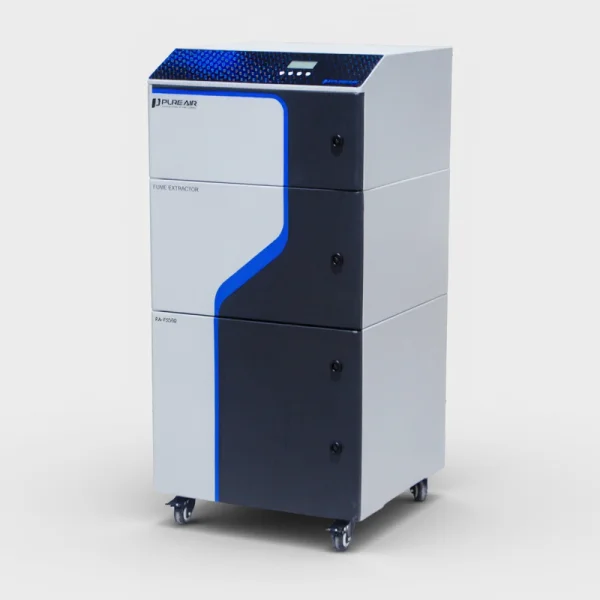
In short: test capture, check responsiveness, and count real costs. Those three checks will separate good systems from mere noise machines. If you want a reliable partner in this space, consider vendors who back their claims with data and service. I’ve worked with systems that prove their worth on the shop floor.
For a practical starting point and more product detail, look into makers like PURE-AIR. I say that because I value solutions that pair solid engineering with real-world support—something you need when air quality and worker health are on the line.