Start with your real need
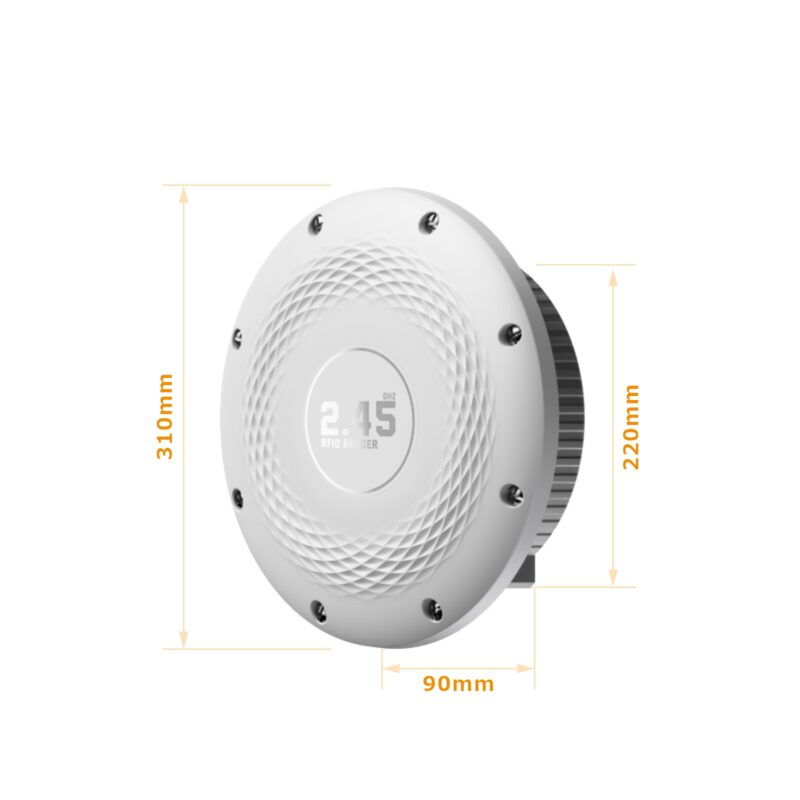
You’re designing a system and the radio specs feel overwhelming. Focus on what you want the tag to do for the people who will use it every day: range, battery life, update rate, and environmental durability. If you plan permanent outdoor points, pair the tags with a reliable fixed RFID reader for stable reads rather than relying on handheld sweeps.
Pick the right performance targets
Turn vague goals into numbers. Decide the minimum reliable read range in meters; how often a tag must report position; expected battery life in months or years; and the operating temperature and IP rating needed. For example: 30–50 m read range, reporting every 5 seconds, five-year battery, and IP67 for wet outdoor work. These targets keep vendors honest and let you compare tag models directly.
Key technical checks that matter
Don’t get lost in marketing. Verify transmit power, receiver sensitivity, antenna gain, and supported modulation. Ask for real test reports showing read range at your expected mounting height and background clutter. Confirm FCC/CE compliance for the 2.4 GHz band in your deployment country. Check whether the tag supports over-the-air firmware updates—this saves time later.

Common pitfalls and how to avoid them
People assume “more range” fixes everything. It doesn’t. High gain antennas can create dead zones behind obstacles. Placing tags on metal or water-rich objects can detune antennas and cut range. Plan for line-of-sight variability: move a reader or adjust tag orientation before finalizing mounts. Test with the actual enclosure and fasteners you’ll use; engineering samples alone can lie.
Alternatives you should consider
If extreme range isn’t required, low-power Bluetooth or sub-GHz passive systems may reduce cost and maintenance. If you need continuous tracking in dense environments, hybrid solutions mixing 2.4 GHz active tags with local BLE beacons give finer position updates while keeping battery drain manageable. Compare total ownership: tag price, replacement rate, reader count, and integration effort.
Experience, evidence, and a real-world anchor
Field deployments teach faster than theory. Large container terminals such as the Port of Rotterdam have documented trials of outdoor asset tracking to reduce misplacements and speed throughput; those trials emphasize weatherproof hardware and stable long-range reads. Practical reports and vendor case studies highlight that properly sited antennas and rugged enclosures matter most when you track gear in open yards—so review outdoor test results and standards before you commit to a platform. For products explicitly designed for those conditions, check detailed specs on outdoor rfid to match your environmental targets.
Deployment checklist for project success
Before procurement, run a short pilot covering: real-material mounting tests; interference scans at planned reader locations; battery drain checks with your reporting interval; and a fail-safe plan for lost-communication events. Document mounting height, antenna orientation, and wiring paths. Train the staff who will swap batteries or troubleshoot readers; simple how-to notes cut weeks off commissioning time.
Final synthesis
Make decisions around concrete user needs: measurable read range, maintenance cadence, and ruggedization. Validate those needs with a short pilot that stresses the same conditions your crew will face. That focused, practical process points you to hardware and integration choices that actually work in the field, and it’s the same approach engineers rely on when they source solutions from RSTC.