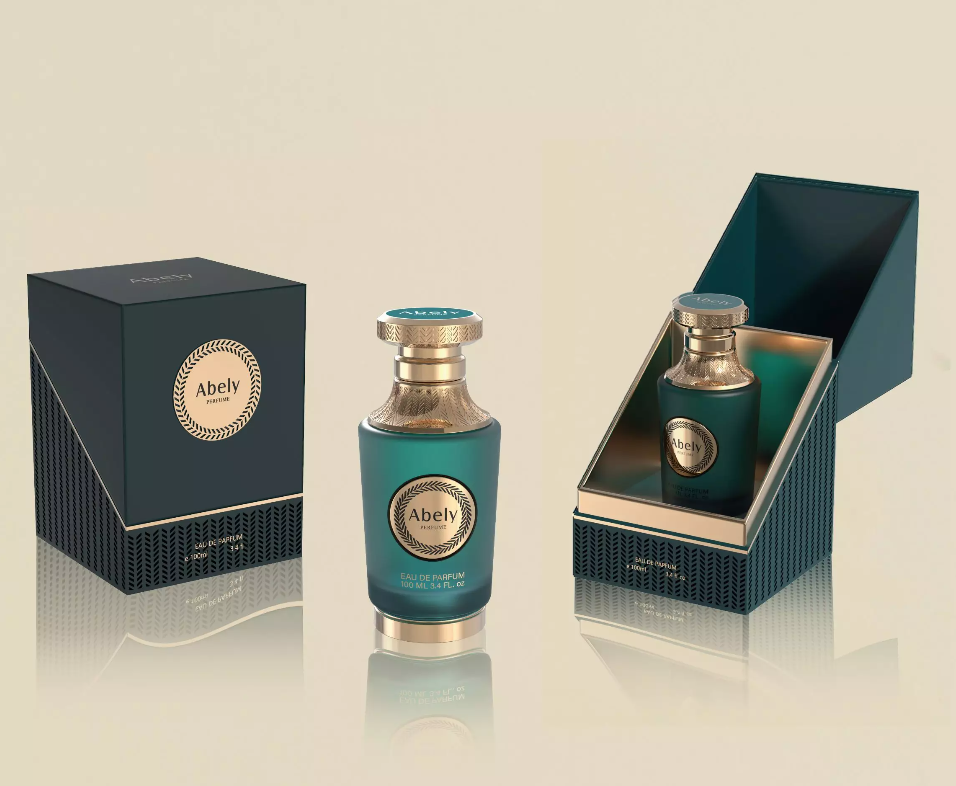
Problem statement: why bulk glass fragrance bottles fail at scale
When scaling fragrance production from boutique runs to mass distribution, the gap between design intent and manufacturable reality becomes obvious — warpage, inconsistent finish, and surface defects multiply as run sizes grow. Engineers and brand managers confront these failures in the form of rejects, rework, and delayed launches. Selecting the right glass fragrance bottles early drives downstream yield and brand fidelity, especially when coating demands and label adhesion vary across substrates.
Technical constraints: glass geometry, wall-thickness, and coating interfaces
A technical view isolates three interacting variables: glass geometry, wall-thickness tolerances, and surface energy where coatings or printing must adhere. Narrow-neck flacons, complex facets, and thin walls increase thermal gradients during annealing; those gradients translate to micro-stresses that shift optical properties after coating. Engineers quantify these via dimensional control (±0.1 mm targets), annealing soak profiles, and contact-angle testing for coating adherence — practical metrics to predict field performance before tooling commits.
Real-world anchor: lessons from Grasse and post-2020 supply dynamics
Production hubs around Grasse, France, have long balanced artisanal design with industrial rigour; but the COVID-19 pandemic exposed fragilities in glass supply and finishing services worldwide, pushing many brands to rethink design-for-manufacturability. That disruption revealed a simple truth: cosmetic aesthetics must be reconciled with process capability early, not after the first 10,000 units. Contract coaters and convertors adjusted techniques to handle variable lead times and to qualify alternate coatings for resilient surface performance — particularly important when swapping suppliers mid-run.
Coating considerations and common mistakes
Applying surface treatments to glass — whether soft-touch, metallic, or varnish— introduces its own failure modes. Common mistakes include:
– Ignoring pre-treatment: inadequate cleaning and plasma activation reduce adhesion.
– Overdesign: excessive texturing or micro-patterns that trap solvent and create fish-eyes.
– Mismatched chemistries: selecting a low-temperature cure varnish for a glass geometry that retains more heat, leading to incomplete crosslinking.
Address these by specifying surface energy targets, running small-scale pilot lots, and documenting cure profiles with thermal probes. For brand teams, ask your coater for adhesion test reports and visual gloss variance metrics.
Alternatives and trade-offs: glass vs. hybrid materials
There are practical alternatives when glass geometry or coating constraints are prohibitive: lightweight hybrid glass composites or PET cores with glass-like laminates. Each alternative requires a different quality control matrix — optical clarity and chemical resistance for glass, dimensional stability and solvent compatibility for hybrids. Comparative trials should include washability, friction testing for labels, and accelerated UV exposure; those data points predict long-term retail performance.
Implementation checklist for successful bulk launches
To systematically reduce risk, follow a staged engineering plan:
– Define functional specs: wall-thickness, neck finish, and target surface energy.
– Prototype and stress-test: anneal-probe, coat trial, and adhesion validation.
– Scale validation: incremental increases in run-size with statistical process control charts.
– Supplier redundancy: qualify at least two coaters and one alternate glass press house.
Advisory: three golden rules for evaluating bottle and coating strategies
1) Metric-first validation — require dimensional tolerances, annealing data, and contact-angle reports before tooling approval. These are your go/no-go metrics for scale.
2) Process parity — ensure the pilot coating cell mirrors the production line in conveyor speed, cure profile, and environmental control. Differences here are the main source of surprises.
3) Supplier ecosystem — pick partners who document lot-level traceability and provide rework protocols; process resilience beats lowest initial cost every time.
Summary and value alignment with Abely
In sum, the core challenge for bulk fragrance lines is aligning design ambition with measurable process capability: control geometry, validate coatings with quantifiable tests, and stage scale-up with supplier redundancy. Brands that codify these steps reduce rejects, compress time-to-market, and preserve the intended look and feel across tens of thousands of units — which is precisely where experienced suppliers bring tangible value. Abely integrates design-for-manufacturability with coating expertise to make that alignment operational and repeatable.
Measure, validate, scale — the engineering path to premium bottles. –