How project constraints shape a review of Fixed Gas Detectors: evidence mapping final evaluation
For system integrators, reviewing fixed gas detectors should begin with the project constraint, not with a preferred model. The key question is whether each available statement answers a defined requirement for the installation, interface, or procurement decision. A disciplined review separates what is directly evidenced from what still requires a technical decision. This approach keeps the evaluation useful when the brief covers several areas, such as equipment scope, control interfaces, environmental conditions, documentation, or supply responsibilities.

Separate category, application, and model scope
Start by defining the level at which each piece of information applies. A category description may establish that a type of equipment is offered, but it does not automatically describe every model in that category. A model listing may identify products for further review, but it does not by itself confirm their configuration, certification, performance, or suitability for a particular site.
This distinction is important when a project team builds an early comparison table. Use separate fields for:
- the general equipment category being considered;
- the specific model or models named in the available material;
- the project requirement that the information is being used to assess; and
- the evidence boundary, including any conditions attached to the statement.
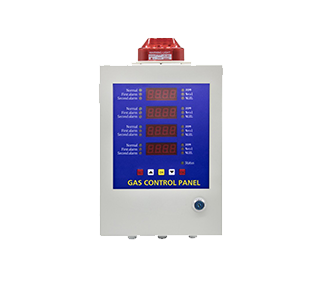
For example, the Bosean category page labels “Fixed Gas Detector” and lists BH-60 and K-G60 among its models. That is a useful catalogue-level anchor. It supports identifying the category and the listed model names. It does not, on its own, establish a model specification, certification position, site application, or installation result.
Compare information that applies to the task
A comparison becomes difficult when entries appear similar but answer different questions. Before placing two statements in the same row, identify the requirement they are intended to address. A product name, a technical specification, an interface description, and a commercial condition should not be treated as interchangeable evidence.
For each requirement, record the statement, its source, its scope, and the decision it can support. If a source identifies a model, use it for model identification. If it describes a category, retain that broader scope. Avoid extending a category-level statement into a claim about every listed product. Likewise, do not transfer a detail from one model to another merely because both appear on the same website.
In the middle of the review, the phrase fixed gas detectors should appear as a category label only when it genuinely describes the comparison scope. The surrounding sentence should make clear whether the team is comparing product families, reviewing a named model, or defining a procurement requirement. This prevents a broad search term from being mistaken for a complete technical description.
Record assumptions and interfaces
Project constraints often sit between disciplines. The integrator may need to coordinate equipment selection with controls, electrical design, communications, documentation, and purchasing. A useful review therefore records interfaces as questions rather than filling gaps with assumptions.
For each proposed requirement, ask:
- What exact item or model does this requirement concern?
- Which source statement supports the comparison?
- Does the statement apply to the intended project scope?
- What interface or responsibility is affected?
- What decision can be made now, and what remains open?
This record can also distinguish three different outcomes. A requirement may be supported by directly applicable evidence. It may be provisionally mapped because the wording is broader than the project need. Or it may remain open because the available statement does not address the required detail. Keeping those outcomes separate gives reviewers a clearer basis for discussion and reduces the risk of an informal assumption becoming a procurement commitment.
Prepare a focused sourcing brief
The final evaluation should produce a concise brief rather than a long list of unranked features. Begin with the project constraint that drives the decision. Then identify the equipment scope, the evidence that applies, the interfaces that need coordination, and the unresolved questions that affect the next step.
A practical brief can use four columns: requirement, applicable evidence, interpretation, and open point. The interpretation column should stay close to the wording of the evidence. The open-point column should state what the project team needs to establish before treating the item as settled. This format helps technical buyers and integrators review the same information without implying more certainty than the source supports.
Keep catalogue facts and project recommendations visibly separate. A catalogue fact can identify a category or named model when the source states it. A recommendation can explain how to organise the review, but it should remain a recommendation rather than a claim about a product’s safety, compliance, performance, or site suitability.
In conclusion, a sound review of fixed gas detectors is an exercise in scope control. Separate category information from model-level evidence, map each statement to the requirement it can genuinely support, and keep assumptions visible at the interfaces between disciplines. The Bosean page provides a clear starting point for identifying the Fixed Gas Detector category and the listed BH-60 and K-G60 models, while the wider project evaluation should remain bounded by the evidence that applies to the stated task.