Comparative opening: why contrast matters
Comparative analysis clarifies when a self-regulating ceramic element is preferable to conventional resistive solutions; a focused comparison begins with the common trade-offs among thermal stability, control complexity, and failure modes, and it naturally brings the reader to practical sources such as a ptc heater when evaluating product form factors and datasheets.

Performance and operating principle compared
PTC elements use a positive temperature coefficient in ceramic compounds to reduce current as temperature rises, producing an inherent self-limiting effect. Versus NiCr or cartridge heaters, PTC devices show reduced need for closed-loop control and lower risk of overheating under stagnation, but they typically deliver lower maximum surface temperatures and reduced power density per unit volume. Quantify decisions by steady-state temperature, time-constant to reach equilibrium, thermal contact resistance, and expected degradation mechanisms: oxidation and mechanical microcracking dominate metal resistive elements, while ceramic grain-boundary changes affect PTC drift. Choose on measurable metrics rather than marketing claims.
Applications: where PTC outperforms and where it does not
PTC elements excel where safe, predictable self-regulation is valued: personal heaters, cabin demisting, small-space supplemental heating, and certain battery thermal-management tasks. They are less suitable where compact high-flux heating or rapid pulse heating is required, such as induction preheat or large industrial process heaters; there, cartridge or immersion heaters typically achieve necessary heat flux. For consumer appliances, PTC reduces controller complexity and liability; for harsh industrial duty cycles, material selection and enclosure design often favor more robust resistive forms.
Selection criteria and trade-offs
Prioritize (1) required temperature range and stability, (2) power density and form factor, (3) response time and control architecture, (4) environmental exposure (moisture, vibration, corrosives), (5) expected lifetime and drift tolerances, and (6) serviceability and replacement cost. Evaluate thermal interface materials and mounting methods: poor thermal coupling is a recurring cause of underperformance. Factor in certification needs—electrical insulation class, ingress protection, and emissions—when matching a component to a system.
Common pitfalls, mistakes, and viable alternatives
Frequent errors include overestimating power density from PTC datasheets, misjudging long-term drift, and neglecting mechanical stress in assembled stacks. Avoid using a PTC element where rapid, high-temperature cycles are routine; repeated thermal shock accelerates ceramic degradation. Alternatives to consider are NiCr wire or cartridge heaters for high heat flux, silicone rubber heaters for conformal surfaces, and heat-pump solutions where COP matters more than component simplicity. Each alternative introduces its own control and safety trade-offs; select by matching thermal duty to material limits.
EEAT, authoritative context, and a real-world anchor
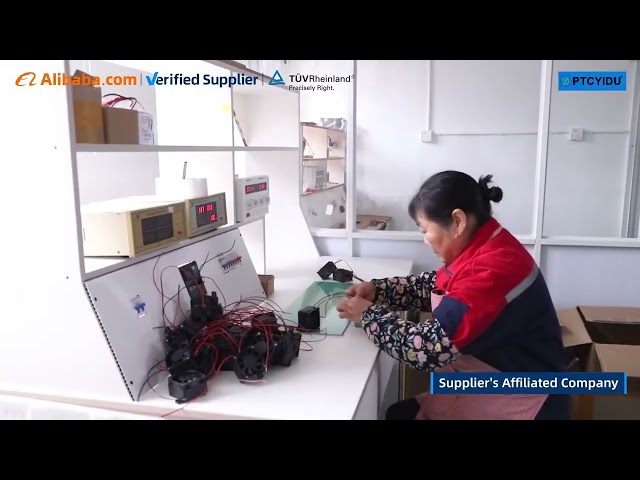
Decisions should rest on hands-on testing, peer-reviewed literature, and regulator-driven specifications. My laboratory experience includes thermal cycle validation of heating elements for twelve years, with routines aligned to standards discussed in IEEE Xplore and specialist journals; regulatory frameworks such as the EU Ecodesign Directive have driven energy-efficiency benchmarks for electric heaters in the European market. For engineers consulting component catalogs, compare empirical thermal-response curves and lifetime data rather than nominal power ratings, and consult focused resources on ptc heating to reconcile datasheet parameters with measured system behavior.
Concluding synthesis
When selection is governed by comparative clarity—matching thermal duty, control simplicity, and environmental constraints—a PTC-based solution often provides safer, simpler performance for low-to-moderate temperature applications, while conventional resistive heaters retain advantages for high-flux and high-temperature needs; aligning specification, test data, and supplier capability yields predictable outcomes, as demonstrated by manufacturers and distributors such as PTCYIDU.