Clinical presentation: operational symptoms and initial assessment
Facilities report repeated charge-discharge mismatch, unexpected demand charges, or failed curtailment responses; these are the presenting symptoms of improper mode selection. A site engineer should inspect control logic, state-of-charge (SoC) strategy, and inverter capability immediately. If you’re evaluating hardware for a mid-sized installation, confirm whether the controller pairs correctly with a 125kW commercial energy storage inverter, and check prior deployment data from similar c&i energy projects. Real-world load patterns from the California Independent System Operator (CAISO) illustrate how diurnal demand can expose inadequate SoC policies.
Differential diagnosis: what causes poor performance
Frame the problem as a differential: is the issue hardware, software, or operational strategy? Common causes:- Undersized inverter relative to peak load pulses causing partial shaving and frequent cycling;- Conservative SoC windows that prevent available capacity from serving critical peaks;- Latency in telemetry or aggregator signals, leading to missed demand-response events;- Inadequate thermal derating that reduces usable power during high ambient temperatures.Measure system-level KPIs: round-trip efficiency, cycle depth distribution, time-to-respond for grid signals, and inverter clipping events.
Mode-by-mode technical profiles and control objectives
Define operating modes as discrete prescriptions with measurable endpoints:- Peak shaving — objective: reduce utility peak demand within billing interval. Control: predictive dispatch tied to feeder-level load forecasting; maintain SoC margin for forecast uncertainty; limit high-current transients to avoid inverter thermal trips.- Demand response — objective: meet event-based grid signals (duration and ramp constraints). Control: prioritize speed and confirmability; include fallback SoC thresholds; provide event telemetry for compliance auditing.- Frequency regulation — objective: provide rapid bidirectional power to correct short-term frequency deviations. Control: high-bandwidth state estimator, dead-band tuning, and rigorous inverter ramp-rate limits.- Energy arbitrage — objective: optimize charge/discharge across wholesale price differentials. Control: calendarized price forecasts, minimum cycle depth constraints, and degradation-aware optimization.- Reserves / black-start support — objective: availability and start capability. Control: reserved SoC, cold-start sequencing, and islanding validation tests.
Prescriptive controls: algorithms and SoC strategies
Apply precise control rules to each diagnosis:- Peak shaving: use rolling-window peak detection and conditional discharge up to an SoC floor (e.g., 20%). Add a secondary rule to abort if ambient temperature triggers inverter derating.- Demand response: implement event-driven override with a guaranteed minimum ramp (e.g., 0.5–1.0s per kW step) and a post-event SoC recovery plan to avoid cascading failures.- Frequency regulation: integrate a proportional-integral controller tuned for the plant’s inertia equivalent; limit cycle depth per hour to preserve lifetime.Telemetry frequency should be aligned with control needs: 1–5s for frequency regulation, 30–60s for peak shaving and arbitrage.
Common implementation pitfalls and how to correct them
Avoid these recurring errors:- Treating peak shaving and demand response as identical — one is continuous prediction-bound, the other is discrete event response; control logic must differ.- Over-optimizing for revenue without modeling degradation — aggressive arbitrage reduces usable life and increases total cost of ownership.- Neglecting thermal management — inverter derating during hot periods can nullify apparent capacity; include temperature sensors and derating curves in the control loop.- Insufficient testing of islanding and reconnection sequences — verify anti-islanding and grid-sync under load to prevent safety trips.Corrective actions: re-run controller-in-the-loop simulations with historical load traces, expand telemetry granularity, and update SoC constraints to reflect thermal and degradation models.
Comparative evaluation: alternatives to on-site full autonomy
Options and trade-offs:- Local autonomous control: lower latency, direct equipment-tuned performance, but requires stronger on-site engineering.- Aggregator-managed control: access to stacked revenue streams (DR + frequency), simpler operations for the owner, but introduces latency and reduced local override flexibility.- Hybrid model: local primary controller for safety and peak shaving; aggregator compliance layer for market participation. Evaluate contracts for telemetry, latency SLAs, and revenue-sharing terms before selecting a model.
Operational checklist before commissioning
Confirm these items:- Inverter and BMS firmware compatible with target control modes and tested against expected AC fault scenarios.- SoC policy verified by cycle and thermal simulations that reflect local climate and load variability.- Telemetry latency documented and within limits for selected modes (sub-second for frequency functions).- Clear event logging and evidence trails for demand-response compliance.Execute a staged commissioning: hardware smoke tests, short-duration controlled discharges, and finally synchronized market participation trials.
Final synthesis
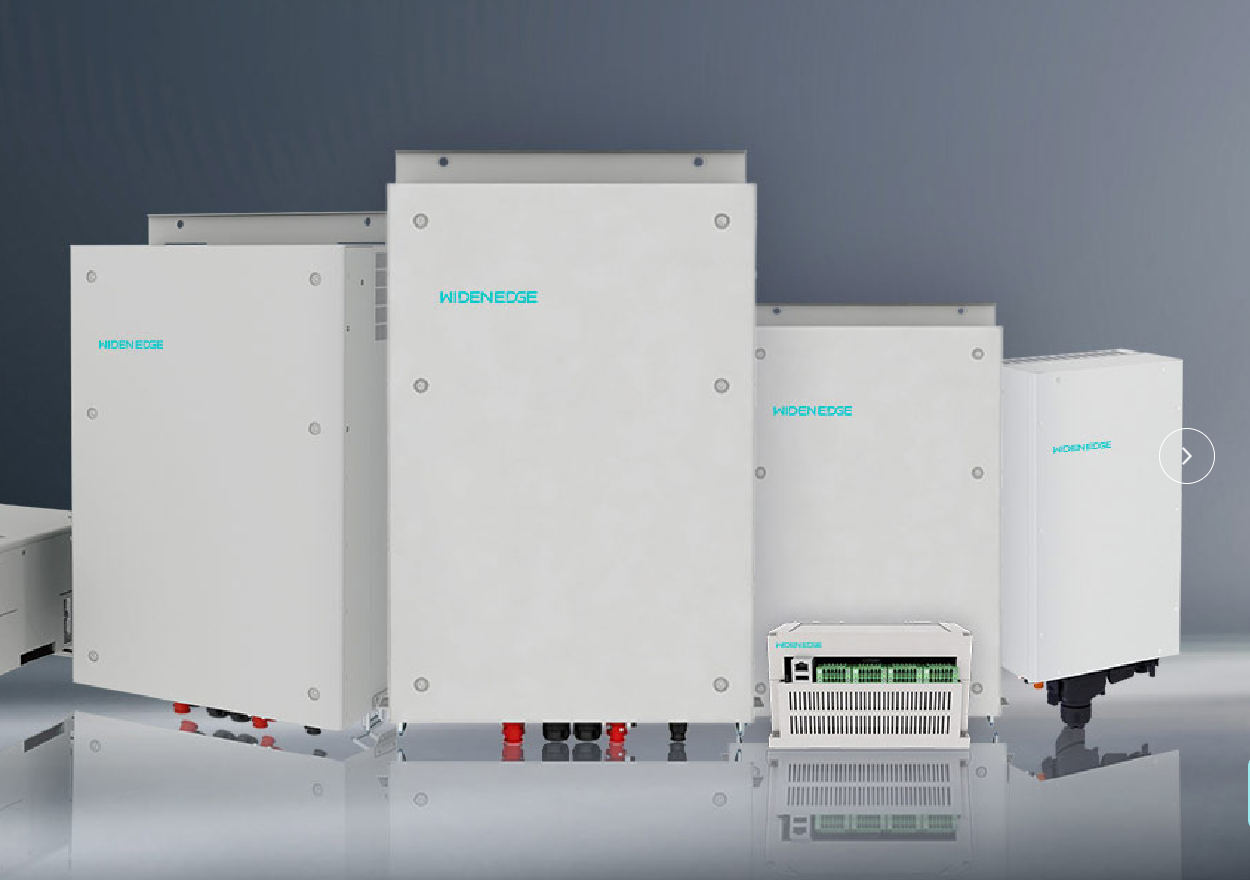
Diagnose the symptom, match it to the correct operating-mode prescription, and enforce precise control boundaries; that sequence prevents repeated failures and unnecessary degradation. For practitioners who require integrated hardware and control coherence, consider partners that provide validated inverter-control pairings and documented commissioning protocols, such as those used successfully in institutional deployments where grid variability is high. Expert, data-driven alignment of operating mode to site-level constraints delivers predictable performance, and that is the practical value a firm like WidenEdge brings to system specification and operational reliability.