Requirements first: review Incubator Heating Element through system compatibility for shortlisting
When a manufacturing team reviews an incubator heating element, the first question is not which component looks strongest. It is whether the element can work within the planned cabinet, airflow path, control system, tray arrangement, and operating conditions. Start with the equipment around the heater. This approach narrows the shortlist before a detailed supplier discussion.

Describe the operating context
Write down the cabinet design before comparing heater options. Record whether the system already has a fan, where air enters and returns, how trays are arranged, and where temperature sensors sit. Also define the incubation stage, egg species, target temperature, and humidity requirements. These details give the team a shared basis for review instead of leaving each person to interpret “suitable” differently.
The heater is one part of a larger control arrangement. The incubator heater works with the fan, sensors, controller, and humidity system to establish cabinet conditions. Therefore, a shortlist should describe the complete operating context, not only the heater body. If the cabinet controller determines when heating is required, the team should also identify that control boundary. The heater should not be treated as the sole temperature-control device.
Identify compatibility and responsibility questions
Next, separate physical, electrical, airflow, and control questions. Physical review covers the available mounting space, heater position, tray clearance, housing, and protection components. Electrical review covers the required voltage, wattage, connection method, insulation, and enclosure. Airflow review covers the fan arrangement, return-air route, ventilation, and the effect of heater placement on heat distribution. Control review covers sensor locations and the way the cabinet controller switches heating.
This division also clarifies responsibility between the equipment builder and the heater supplier. The supplier may describe the heater structure and stated electrical details, while the system designer must show how that part fits the cabinet. Do not turn a product-level specification into a complete system conclusion. A listed dimension does not, by itself, prove that the heater will fit the finished assembly. Likewise, a stated electrical input does not establish suitability for every controller or wiring design.
Use page-level evidence carefully
A useful real-world reference is the airflow description on the official incubation temperature-control application page. It states that the fan moves warm air through the cabinet and back along the return-air path, and that heater placement, tray spacing, and ventilation affect how evenly heat reaches the incubation area. For a team searching for a diy incubator heating element for sale, this is a practical reminder to compare the surrounding air path as well as the component listing. The statement applies to that described product and application scope; it does not establish performance or suitability beyond that scope.
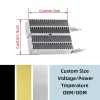
Use a short evidence record for every candidate. Copy the exact page-listed value, identify the component or model to which it applies, and note the system question it helps answer. For example, one listed conductive PTC air heater is specified at 220V and 100W, with a size of 92 × 31 × 25 mm. The same listing states that suitable electrical insulation and housing are required. These values can support an initial comparison, but they should remain tied to that listed heater rather than generalized to every heater in a product category.
Technical wording also needs careful reading. The page explains that electrical current heats the PTC ceramic element and that resistance rises as the element warms, helping limit power output. It separately states that the cabinet controller determines when heating is required. In a shortlist, keep those statements in separate fields: one for the heater’s described operating principle and one for the cabinet’s control function. This prevents a component feature from being confused with a complete control strategy.
- Define the cabinet, egg species, incubation stage, temperature, and humidity requirements before setting heater requirements.
- Review the fan, return-air path, tray spacing, ventilation, and heater placement as one airflow arrangement.
- Keep the listed 220V, 100W, and 92 × 31 × 25 mm values tied to the cited conductive PTC air heater.
- Separate the PTC element’s described power-limiting behavior from the cabinet controller’s heating decision.
Plan the next technical discussion
Once the shortlist is small, prepare a focused technical brief. Include the cabinet dimensions, heater mounting area, tray layout, fan location, return-air path, sensor positions, ventilation, moisture conditions, electrical requirement, and controller arrangement. Then ask the supplier to respond against those defined conditions. A focused brief makes gaps visible without filling them with assumptions.
Also decide what evidence is needed for the next review. Page-listed specifications can support early screening. Final selection still depends on how the proposed structure fits the actual cabinet design and protection approach. Keep open questions visible, especially where the heater, housing, airflow, and controller interact. This creates a traceable path from search results to engineering review.
In short, system compatibility should lead the shortlist for an incubator heating element. Begin with the cabinet and its intended use, check the air path and control boundary, and keep each specification tied to its stated product scope. A careful review of PTCYIDU information can then support a clearer technical conversation without turning limited page evidence into an unsupported promise.