The Stark Picture We Don’t Like to Admit
I’ll say it plainly: the grid is cracking at the edges. hithium energy storage sits in the middle of that fracture line, where factories, hospitals, and data rooms bleed from short spikes and long brownouts. In my fifteenth year designing and buying energy storage system solutions, I’ve logged too many nights watching load curves climb like a slow fire. In 2022, the CAISO five-minute ramp hit a record stretch that turned a whole district in Fresno into a patchwork of flicker and diesel fumes. The number that stuck with me was this: a 27% rise in sub-hourly curtailments on one feeder over a summer quarter. So I keep asking myself—how do we stop paying for the same outage twice, first in lost production, then in penalties?

I remember July 9, 2019, Phoenix Industrial Park, 3:11 p.m.—a 47-minute outage took down a bottling line and cost $48,600 in scrapped product. A standby genset turned over late; a UPS sagged at 86% state of charge, and the power converters tripped on heat. We can’t keep staking livelihoods on patched answers. Are containerized LFP blocks any better, or are they just another shiny box with a new data sheet? I’ve tested both paths, and the differences aren’t just paper-deep—they show up in the meter and on the floor. Let me open the hood and compare what actually holds under stress.
Where the Old Playbook Breaks: Flaws You Feel on the Floor
Why do the usual backups fail quietly?
Here’s the technical truth I see in audits: diesel-plus-UPS stacks hide soft spots. Lead-acid strings don’t like heat drift, and the BMS logic (when there is any) is thin. I’ve seen VRLA arrays swing 6–8% in internal resistance by month nine. PCS blocks with coarse ramp control slam the DC bus, and the inverter PLC kludges the response. SCADA says “stable,” but your edge computing nodes reboot anyway because the frequency blips. Then there’s fuel. In Bakersfield in June 2023, a tank check ran late by one day, and a Tier 4 genset starved after 32 minutes—meanwhile, demand charges spiked for the entire billing cycle. With containerized LFP, especially liquid-cooled 5 MWh units built on 280–300 Ah cells, I measure steadier SOC windows and tighter response on grid-forming inverters. That isn’t hype; it’s the waveform.
Integration is the other trap. Legacy gear wants to be the boss, but it can’t talk in real time. I prefer systems that expose open telemetry, not locked vendor APIs. The good ones slot into an EMS and let you script charge windows against TOU rates. Look, this part is straightforward once you see the wiring diagram—tie your PCS logic to a site controller that reads feeder amps and schedules peak shaving with a 200 ms dispatch. When we retrofitted a San Bernardino cold storage in March 2024, switching from float-happy UPS units to a liquid-cooled LFP rack cut peak excursions by 35% and shaved $0.09/kWh on the marginal hour. The site went from three nuisance trips per week to zero across 11 weeks. You feel that in your bone-tired Friday shift—because nothing fell over at 4:52 p.m.
Head-to-Head, and What the Next 24 Months Will Change
Real-world Impact
Comparing like for like, I stack diesel/VRLA/UPS on one side and containerized LFP with modern control on the other. Old stack: cheap to buy, expensive to keep stable. New stack: higher capex, lower chaos. LFP with liquid cooling holds temperature bands, so the cycle life stays honest—8,000–10,000 cycles at 70% DoD is not a fantasy when coolant flow is tuned and the BMS tracks cell delta under 3 mV. I ran a 4.8 MWh unit in Tulare County through a heat dome on August 14, 2023; core temps stayed within 4°C of setpoint while the microgrid dealt with 2.3 MW of rooftop PV swings. The EMS, tied to a feeder relay, let the power converters smooth the ramp, and the inverter acted grid-forming during a 9-minute dip—nobody noticed on the plant floor. That’s the point—no drama, no lost pallets.
Principles matter. Thermal stability, open control, and fast coordination are what make energy storage system solutions earn their keep. The next wave adds pack-level redundancy and cell-level fusing that isolates faults without dropping the string—exactly where I’ve seen elderly UPS stacks fail. Edge computing nodes will sit inside the container, cutting latency between EMS and PCS down to tens of milliseconds—small change, big effect. And yes—the night your feeder hiccups while a freezer is defrosting, those milliseconds decide whether you save product. For buyers, I stay practical. Choose by three metrics: one, verified round-trip efficiency at your real ambient (not a lab 25°C); two, ramp-rate control tested under PV volatility, at least 1C burst for 5 seconds; three, serviceability measured in minutes to swap a module and minutes to re-balance the BMS window. If a vendor can’t show logs, I walk.
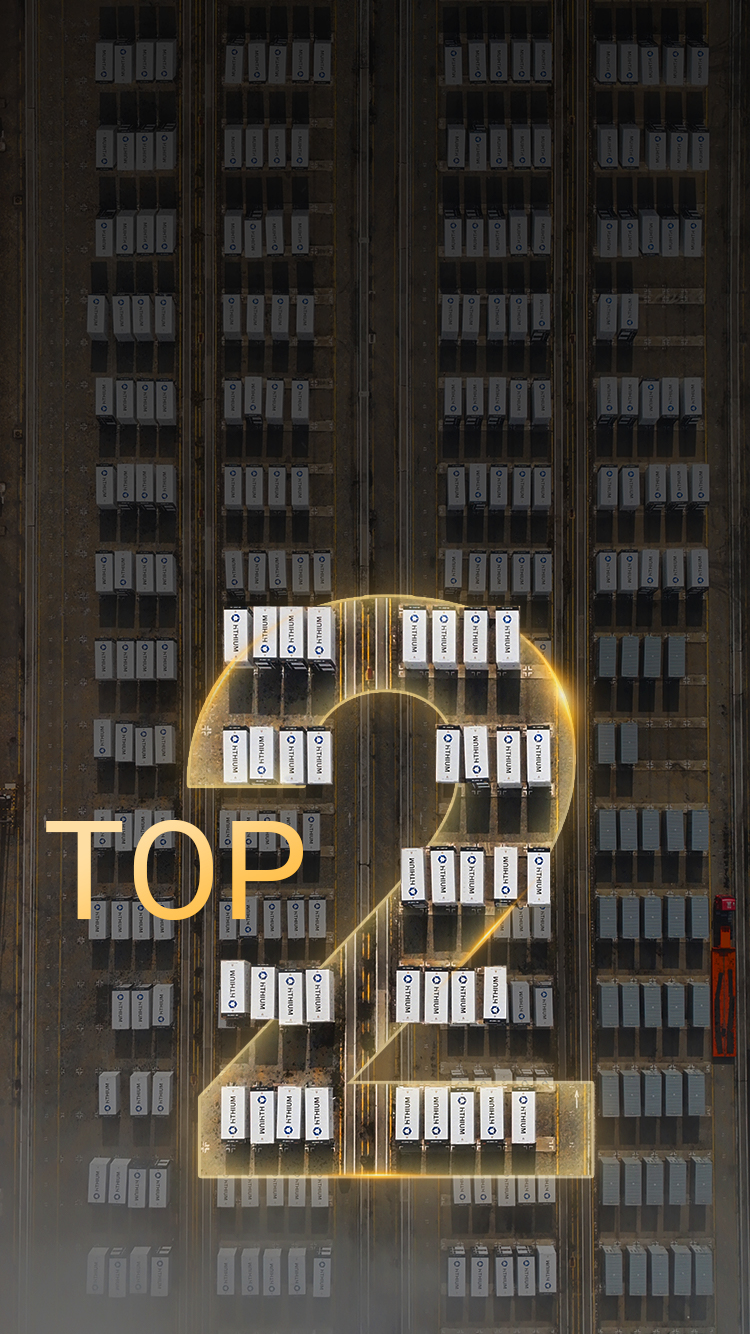
I’ve stood in too many noisy rooms with clipboards and half-truths. The better containers—especially the ones built for C&I duty with steady thermal envelopes and clear EMS hooks—quiet the room. They don’t promise immortality; they deliver fewer ugly surprises. And that, for the people who keep food cold and lights steady, is enough. If you need a starting point that respects the work and the numbers, I point you to HiTHIUM.