Introduction: Why We Keep Chasing the Perfect Machine
I once watched a shop manager wrestle with a stuck toolchanger while a customer waited — I still remember the groan. In that moment I thought: if only the machine wasn’t designed like a puzzle. In the real world, names like DMG MORI, Mazak, Haas, Okuma, and Hurco come up when you ask about 5 axis CNC machining center manufacturers, and everyone has an opinion (and a war story). Data shows shops lose hours each week to setup errors and thermal drift — so why do we keep buying “solutions” that skip the basics?

Let me be blunt: the sales decks praise spindle speed, multi-axis interpolation, and fancy GUIs, but the shop floor asks for reliability and predictable cycle times — not glitter. I’ll walk you through what I’ve seen work and what keeps failing. Expect a few truths and one or two snarky notes — because honestly, I’m tired of seeing the same mistakes. Next up: what really breaks down in old approaches — and why that matters to your bottom line.
Why Traditional 5 Axis Machine Center Approaches Fall Short
5 axis machine center designs often read great on paper. But when I peer under the cover, the same old issues surface — poor thermal control, clumsy toolpaths, and fragile interfaces. I’ll define the deeper problem: manufacturers historically optimized for peak metrics (top spindle RPM, fastest toolchanger swaps) rather than steady-state performance. The result? Shops chase a benchmark but suffer day-to-day variability. Look, it’s simpler than you think — repeatability wins over headline speed.
So what really fails?
Two common technical failings: inadequate thermal compensation and simplistic motion control algorithms. Thermal compensation should be treated like part of the control loop — not an afterthought. And motion control without refined servo tuning and backlash compensation produces inconsistent surface finish and poor tolerance holding. I’ve seen setups where G-code looked perfect, but tool deflection and thermal creep ruined parts after the second shift. The pain is real: scrapped parts, rescheduled orders, and irritated teams — funny how that works, right? If your future buying decision ignores these practical failures, you’re buying an expensive headache.
New Principles and Practical Metrics for Choosing a Factory
Shift the conversation: instead of chasing top specs, I want to explain new technology principles that actually move the needle. Modern 5-axis machines incorporate predictive thermal models, closed-loop force sensing, and smarter path planning. When a 5 axis cnc machining center factory designs around these principles, the machine behaves more like a seasoned operator — anticipating, adapting, and correcting. I’ll be direct: integration of sensor feedback (force, temperature) into the controller changes everything — it reduces rework and shortens cycle-time variation.
What’s Next — Practical steps
Adopting these principles means asking vendors for evidence: show me thermal maps over a production run, give me closed-loop torque data, and let me see path-optimization proof. Compare factories on their systems, not their brochures. Also — request a trial run or a loaner part program if possible. I’ve sat through many demos; rarely do they mimic real production. Short story: demand metrics that prove steady performance, not just peak numbers. — and yes, insist on a sensible maintenance plan.
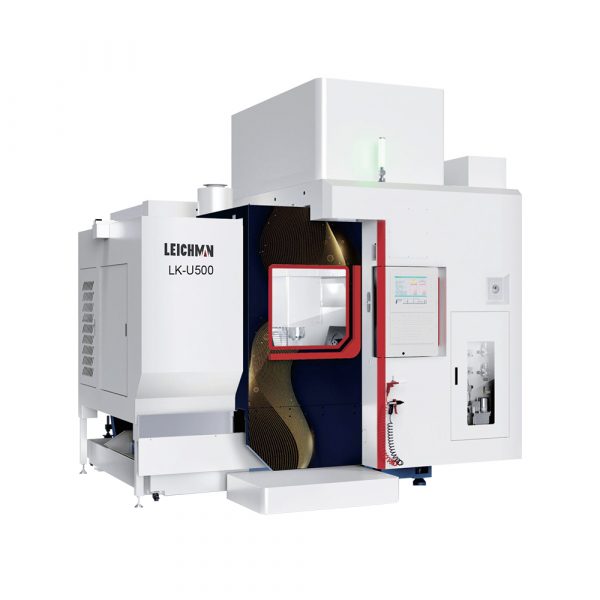
To close, here are three evaluation metrics I use when advising shops: 1) Long-run repeatability (measured over shifts, not a single part), 2) Integrated sensor feedback (thermal, force, encoder resolution), and 3) True cycle-time consistency under load. Use these, and you’ll stop buying theatrical spec sheets and start buying workhorses. We’ve learned these lessons the hard way — so take them and skip the usual pain. For manufacturers and solutions I watch closely, see Leichman.