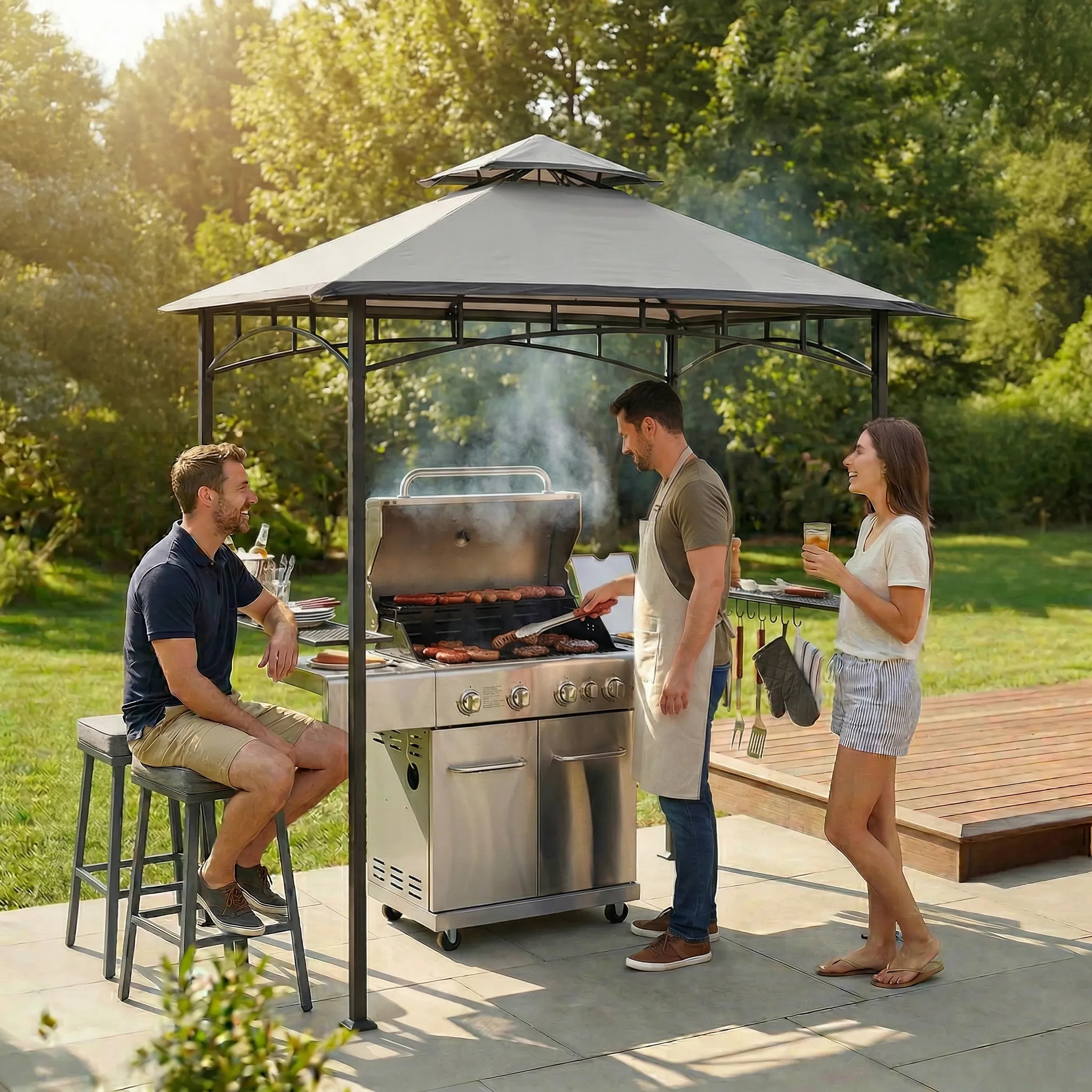
A more thoughtful Sunjoy Outdoor Gazebos choice comes from price comparisons across different sizes for backyard dining
Comparing SUNJOY outdoor gazebos for backyard dining starts with the space and routine, not with the lowest displayed price. First decide what the shelter needs to accommodate: a small table, a larger dining arrangement, occasional meals, or regular hosting. That answer gives the product listing a practical purpose. It also helps you compare differently sized listings without treating every price difference as a direct measure of value.

Define the dining job before opening product pages
Write down the basic use case before comparing models. Measure the area you can actually devote to the gazebo, then note the clearance needed for people to sit, stand, and move around the table. These are planning steps, not claims about any particular model. Their purpose is to prevent a listing with an appealing price from becoming a poor fit for the available space.
Next, separate occasional use from a more regular outdoor dining routine. A compact arrangement may suit a smaller footprint, while a larger arrangement may be worth considering when the dining area needs to support more furniture. The key comparison is not simply small versus large. It is whether the stated size on a listing matches the way you expect to use the area. Keep the intended table, chairs, grill, planters, or walking route in view as you review each option.
Read dimensions and labels as separate comparison fields
The outdoor gazebo collection lists hard-top, soft-top, and wood gazebo categories, and its product listings display sizes plus material or roof labels. That gives shoppers several fields to record rather than one general impression. Start with the stated overall size. Then record the roof label and material label separately. A listing may look comparable to another because both are described as gazebos, while the page presents different categories or labels.
The collection also exposes filters for overall size, roof type, column dimensions, product shape, material, price, and product type. These are useful sorting points for a comparison sheet. For each candidate, copy the information shown on the page into matching columns. Do not convert a filter into a promise about a specific model. A filter tells you how the collection can be narrowed; it does not establish that every listing includes every option.
Examples displayed on the page include cedar, PC-roof, aluminum, solar, poolside, and pergola products. Treat these as examples of the labels or product descriptions presented in the collection, not as a reason to assume that one product combines all of them. For backyard gazebo options, compare the exact labels attached to the individual listing you are considering. This keeps a broad collection description from becoming an unsupported model-level conclusion.
Make price comparisons fair across different sizes
Price is one of the collection’s available filters, but a price comparison needs context. Record the listed price alongside the stated size, roof type, material, and product type. Then ask what is actually being compared. If two listings have different dimensions or different labels, their prices may describe different configurations rather than two versions of the same choice.
A useful worksheet can have five simple questions: What size is stated? What roof type is stated? What material is stated? What product category is shown? What price is displayed? Add a sixth question for your own use: does this configuration fit the dining plan? The last question is a recommendation for the shopper, not a verified product attribute. It keeps the comparison tied to the real purpose of the space.
Separate page details from assumptions
Use a two-column note while reviewing a product page. In the first column, write only details directly shown, such as a stated size, a roof label, a material label, or a displayed price. In the second, write questions that still affect your decision. For example, you might need to clarify how the listed dimensions relate to your planned table or whether the selected model has the particular feature you expected. Keep those questions separate from the evidence you have already recorded.
This distinction matters because collection-level filters and examples help with screening, but they do not automatically describe every model. The page filters include overall size, roof type, column dimensions, product shape, material, price, and product type. Use them to narrow the field, then read the selected product listing on its own terms. Avoid treating a category name, a nearby example, or a filter option as confirmation of an unlisted feature.
- Record the stated overall size before comparing prices across listings.
- Record the roof type and material as separate page-listed fields.
- Note the product shape and product type shown by the collection.
- Treat cedar, PC-roof, aluminum, solar, poolside, and pergola descriptions as displayed examples, not as features every model has.
- Compare the displayed price with the specific listing’s documented size and labels.
Use a repeatable product-page checklist
Before choosing, compare a short list of candidates using the same fields in the same order. Start with fit for the dining area. Continue with the stated dimensions and labels. Finish with price and any model-specific questions that remain. This process makes the comparison easier to explain to another household decision-maker and reduces the chance that one attractive detail dominates the review.
It is also helpful to save the page wording you used for the comparison. That preserves the difference between what the collection shows and what you inferred from it. If the listing presents a size, roof type, material, or price, record that exact field. If the collection only offers a filter or category, record it as a screening aid rather than as a confirmed feature of every product.
Match the final choice to actual use
The best comparison is the one that connects the price to a suitable dining plan. A lower-priced listing may not serve the intended arrangement if its stated size does not fit the space. A larger listing may not be the right choice simply because it offers more area. Review the dimensions, page-listed labels, product category, and displayed price together, then select the option whose documented details align most closely with the way you plan to use the backyard.
A thoughtful SUNJOY choice therefore comes from disciplined comparison rather than from a single filter or headline price. Use the collection to narrow the field by size, roof type, column dimensions, shape, material, price, and product type. Then judge each remaining listing against your dining space and routine, keeping confirmed page details separate from assumptions.