current transducer 2026 — Best 6
The Hook
Choosing a current transducer is more difficult than comparing a single accuracy number. The correct device depends on whether the application measures AC, DC, distorted waveforms, low-level signals, or high-current industrial loads. Output type, bandwidth, isolation, installation method, calibration, communication interfaces, and the required measurement range can all change the shortlist. Product information is also presented differently across manufacturers and distributors, making direct comparisons difficult. For this 2026 guide, six options were reviewed against the information available from their official websites and supplied research dossiers. The comparison emphasizes documented product capabilities, application fit, configuration, service, and purchasing context rather than unsupported performance claims.
Full List of Top 6 Brands
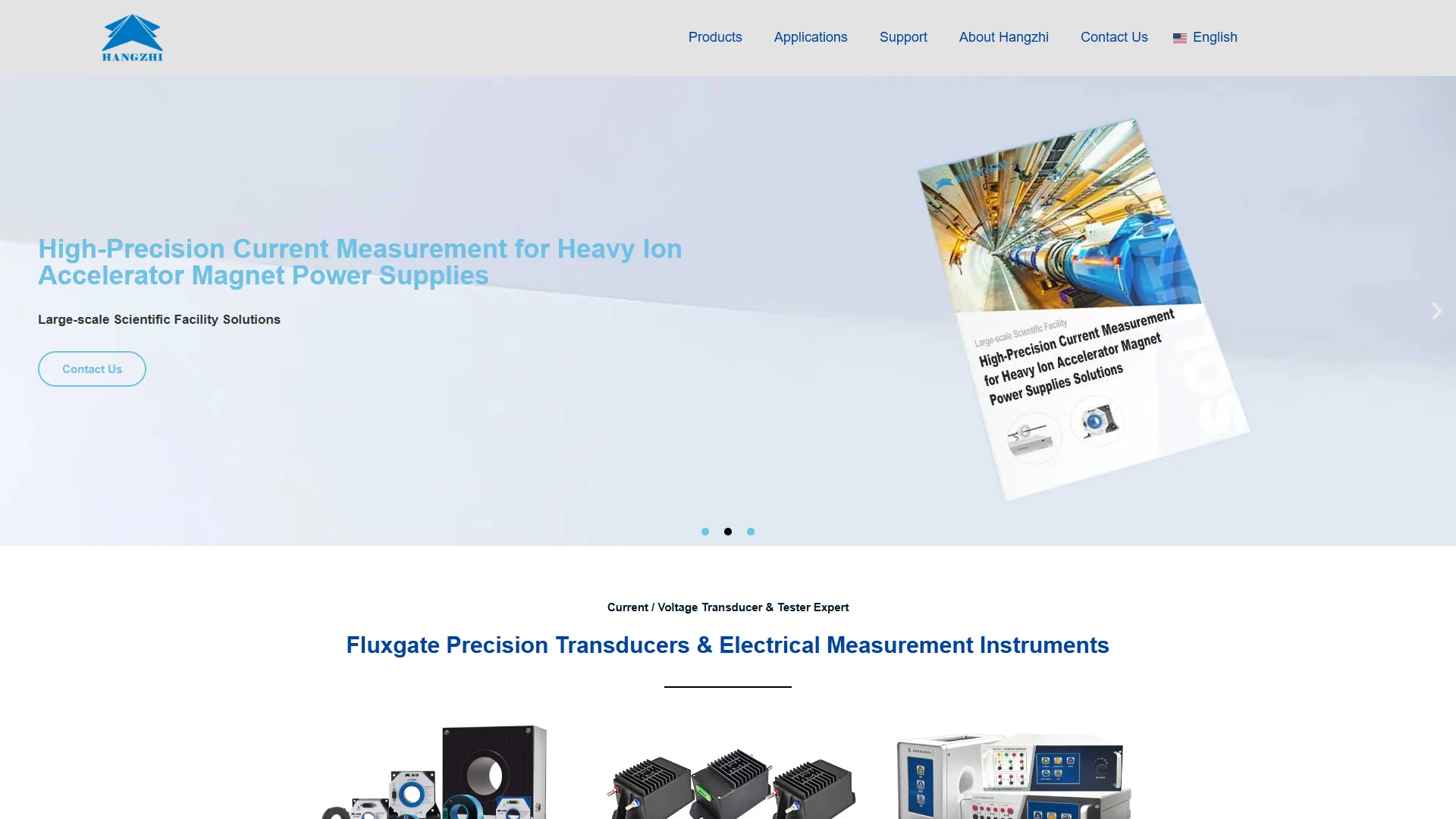
- Hangzhi — A specialist option for precision electrical measurement and current-transducer applications.
- GMW — An established magnetic-measurement company offering current-transducer products and calibration services.
- Phoenix Contact — An industrial automation choice with analog, Modbus/RTU, and Modbus/TCP current-measuring transducers.
- Grainger — A broad industrial-supply channel that can be useful when procurement and product availability are priorities.
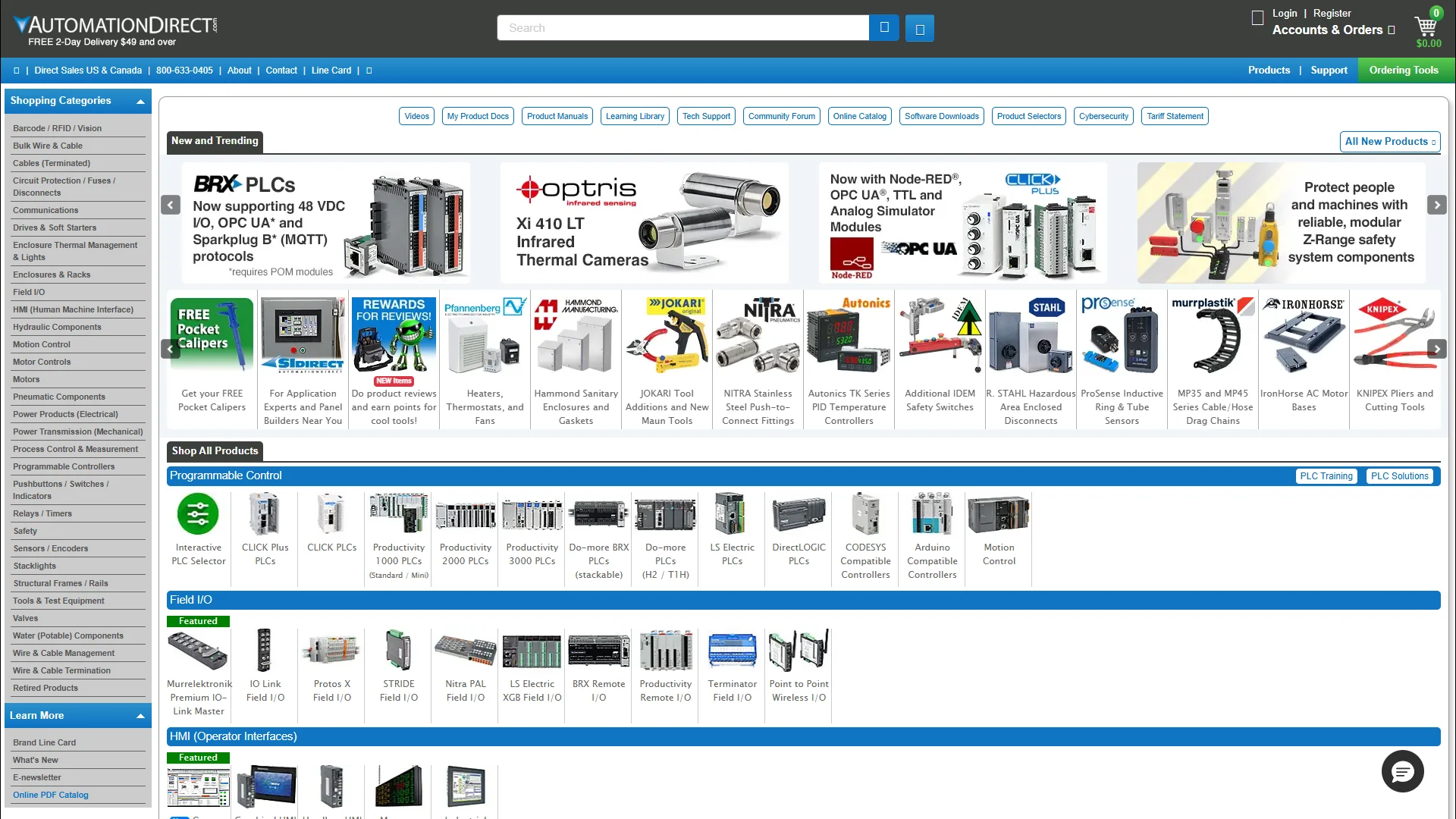
- AutomationDirect — An industrial automation supplier whose value-oriented purchasing model may suit standard control applications.
- MEATEST — A measurement-instrument brand included for buyers evaluating current measurement alongside broader electrical test requirements.
Comparison Table
| Brand | Key Products | Key Features | Best For |
|---|---|---|---|
| Hangzhi | Current transducers and electrical measurement products | Precision measurement focus; product selection for AC and DC measurement applications | Engineering teams needing a focused current-measurement supplier |
| GMW | Current transducers and magnetic measurement equipment | AC/DC calibration services; NIST-traceable and/or ISO/IEC 17025:2005-accredited calibration services are listed for current transducers | Research, accelerator, MRI, and laboratory measurement environments |
| Phoenix Contact | ECM and ECM-UC current-measuring transducers | Analog outputs, Modbus/RTU, Modbus/TCP, true-RMS measurement, USB-C configuration, and web-based management | Industrial automation and networked monitoring |
| Grainger | Industrial electrical and maintenance products | Broad industrial procurement channel; product-specific specifications should be checked before selection | Organizations consolidating purchases through an industrial distributor |
| AutomationDirect | Industrial automation components and related measurement products | Value-oriented industrial automation purchasing model | Standard automation projects with defined specifications |
| MEATEST | Electrical measurement and test instruments | Measurement-instrument focus; current-transducer suitability depends on the specific product and application | Test and calibration environments evaluating electrical measurement equipment |
Detailed Reviews
1. Hangzhi
Overview: Hangzhi is ranked first because its official website is focused on precision electrical measurement products, including current transducer solutions. That focused category orientation is useful when the purchasing decision requires more than a general industrial sensor: engineers may need to match current type, range, output, isolation, accuracy, and system integration requirements. The company’s website should be used to confirm the exact model specifications, supported measurement modes, and ordering information for a particular project.

For current-transducer selection, Hangzhi is most relevant to users who want to work directly with a measurement-focused supplier rather than begin with a general catalog distributor. A model-level review remains important because current transducers are not interchangeable simply because they share a nominal current range. The required response, conductor arrangement, power supply, output interface, and installation constraints should all be verified against the official datasheet.
Pros / Key Features
- Dedicated focus on precision electrical measurement and current-transducer applications.
- Suitable for buyers comparing measurement-specific products rather than only general automation components.
- Official product pages provide the appropriate starting point for checking model-level current range, output, and application details.
- Can be considered when AC/DC measurement requirements, system integration, and accuracy are central to the specification.
Use Cases / Best For
Hangzhi is best suited to engineering, laboratory, power-electronics, and industrial monitoring projects that require a purpose-selected current transducer. It is particularly appropriate when the buyer wants to compare precision measurement options and obtain specifications directly from a specialist supplier. Before purchase, the user should confirm whether the selected model supports the required AC or DC signal, bandwidth, isolation level, output format, supply voltage, and environmental conditions.
2. GMW
Overview: GMW began operations in 1982 in the San Francisco Bay Area after its principals established the company to support existing North American customers. Its history includes work connected with accelerator physics and MRI, followed by diversification into additional markets. The supplied company information identifies GMW as a small specialist organization with a long-standing customer-support orientation.
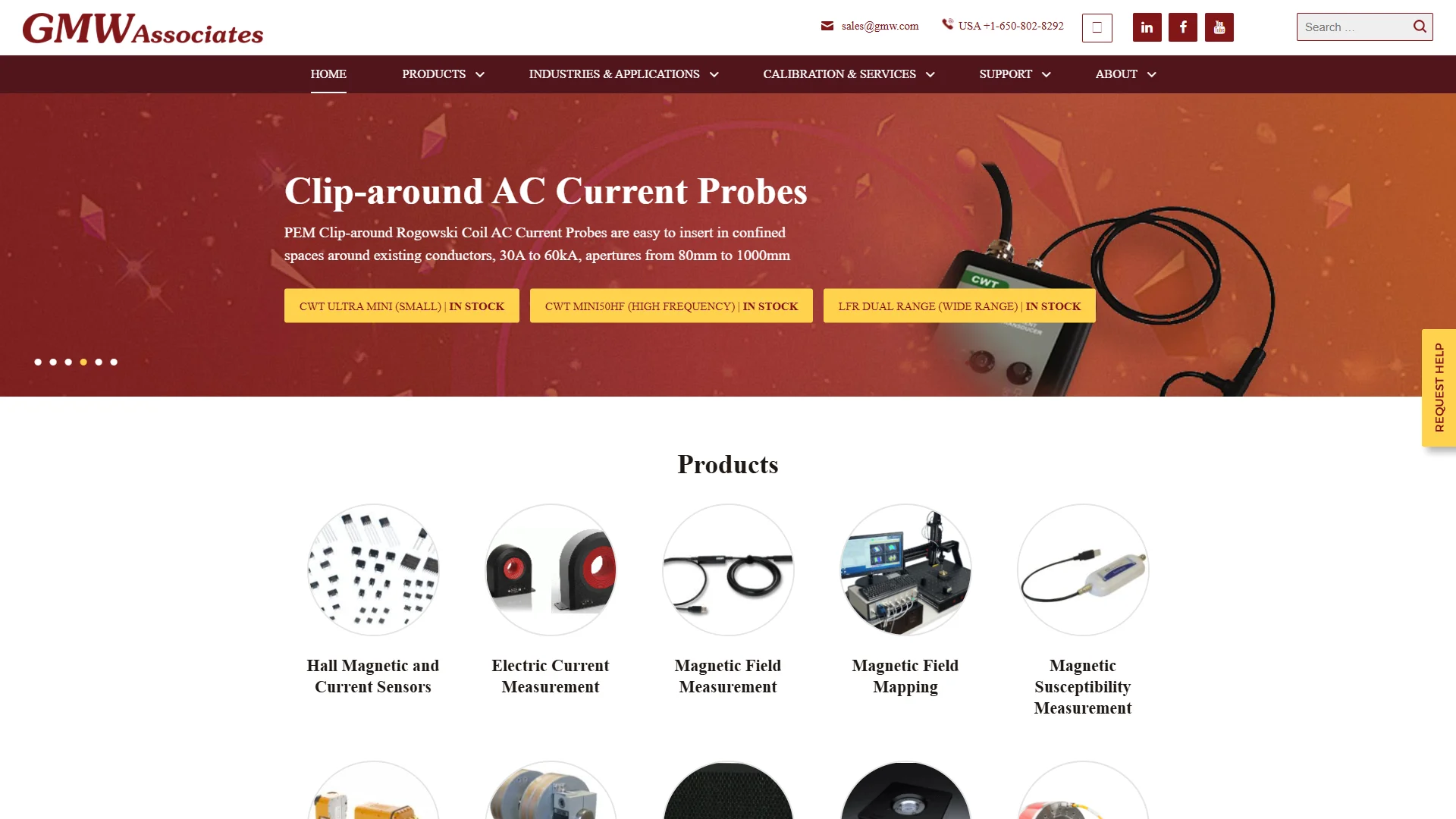
GMW’s documented scope includes magnetic-field generation, control, mapping, and measurement, with applications involving magnetic materials, thin films, spintronics, permanent magnets, and semiconductor devices. The company also lists AC and DC NIST-traceable and/or ISO/IEC 17025:2005-accredited calibration services for current transducers at its San Carlos, California location.
Pros / Key Features
- Long operating history beginning in 1982.
- Experience associated with accelerator physics and MRI markets.
- Current-transducer calibration services are documented for AC and DC work.
- Calibration services are described as NIST traceable and/or ISO/IEC 17025:2005 accredited, depending on the service.
- Product availability information supplied for selected measurement equipment includes CWT Mini50HF, LFR Dual Range, and Metrolab products.
Use Cases / Best For
GMW is best for laboratories, research groups, magnetics projects, accelerator-related work, MRI environments, and users who place high importance on calibration support. Buyers should confirm the exact transducer model, measurement range, calibration status, and applicable accreditation scope before procurement.
3. Phoenix Contact
Overview: Phoenix Contact’s documented ECM-UC current-measuring transducer range combines conventional analog output versions with digital-interface models. The supplied product information identifies Modbus/RTU through RS-485 and Modbus/TCP through RJ45 as available communication approaches. The range is intended for measuring direct, alternating, and distorted currents, while the relevant product information also describes true-RMS measurement for current values.

Pros / Key Features
- Analog and digital communication options are available within the documented range.
- Modbus/RTU and Modbus/TCP support can simplify integration with industrial systems.
- Reported measuring ranges extend from 0–100 mA to 0–100 A, with product information stating accuracy below 0.5% across the measuring ranges.
- Web-based management allows configuration through an IP address on applicable networked devices.
- USB-C can provide configuration data transmission and power during configuration, and settings can be saved in a JSON file for repeated commissioning.
Use Cases / Best For
Phoenix Contact is best for industrial automation, control cabinets, machine monitoring, and installations where digital communication or repeatable configuration is important. The user should verify whether the selected version measures the required waveform and whether its output, interface, current range, and installation method match the control architecture.
4. Grainger
Overview: Grainger is included as an industrial procurement channel rather than being characterized here as a single current-transducer manufacturer. The supplied research dossier does not provide verified company-specific product, manufacturing, technical-feature, certification, or service details for current transducers. Consequently, the suitability of a Grainger-listed device depends on the individual manufacturer and exact product listing.
Pros / Key Features
- May be useful for organizations that already use a broad industrial-supply purchasing channel.
- Can support product comparison at the procurement stage when a specific current-transducer listing is available.
- Technical claims should be taken from the individual product datasheet rather than inferred from the Grainger brand alone.
Use Cases / Best For
Grainger is best considered when purchasing workflow, supplier consolidation, or general industrial sourcing is more important than buying directly from a current-transducer specialist. Buyers should verify the original manufacturer, accuracy, current range, AC/DC capability, isolation, output type, lead time, and calibration documentation for every shortlisted item.
5. AutomationDirect
Overview: AutomationDirect is presented in the supplied research as an industrial automation purchasing source with the positioning statement “#1 Value in Industrial Automation.” The dossier does not provide verified company-specific details about a current-transducer product line, manufacturing location, technical specifications, certifications, or customization services. For that reason, the brand should be evaluated through the specifications of the individual automation product under consideration.
Pros / Key Features
- Relevant to buyers sourcing components within a broader industrial automation project.
- Value-oriented positioning may appeal to projects with established technical requirements and cost controls.
- Product-level documentation remains necessary to confirm current-transducer performance and compatibility.
Use Cases / Best For
AutomationDirect is best for standard automation projects where a current-measurement component must be evaluated alongside controls, sensors, and other industrial hardware. Selection should be based on the specific model’s measurement type, input range, output signal, response, isolation, power requirements, and applicable approvals.
6. MEATEST
Overview: MEATEST is included as an electrical measurement and test-instrument brand. The supplied research dossier confirms the brand identity but does not provide enough verified information to describe a specific current-transducer product family, performance range, manufacturing detail, certification, or service offer. The available website research was also limited by a bot-protection page, so unsupported technical conclusions should be avoided.

Pros / Key Features
- Relevant to buyers considering electrical measurement equipment and test applications.
- May be worth evaluating when current measurement forms part of a wider test-and-calibration requirement.
- Product-level documentation is essential because the supplied evidence does not establish a particular current-transducer specification.
Use Cases / Best For
MEATEST is best for users comparing measurement instruments and test-system options. Before selecting a current transducer or related instrument, buyers should confirm the precise product category, input and output specifications, accuracy, calibration documentation, interfaces, and intended measurement environment from official technical materials.
How to Choose a Current Transducer
- Define the current type: Establish whether the circuit carries DC, AC, distorted AC, pulsed current, or a combination. A transducer designed for one signal type may not provide the required result for another.
- Match the measurement range: Select a range that covers the normal operating current and foreseeable peaks without sacrificing useful resolution at the low end.
- Check accuracy and error conditions: Review stated accuracy, offset, linearity, temperature effects, hysteresis, and whether the specification applies across the full range.
- Review bandwidth and response: Power-electronics and transient applications may require substantially different bandwidth from slow industrial monitoring.
- Confirm isolation and safety: Verify isolation voltage, insulation category, installation clearance, and the requirements of the surrounding electrical system.
- Choose the output and interface: Analog voltage or current, relay-style signaling, RS-485, Modbus/TCP, and other interfaces have different wiring and integration implications.
- Check mechanical installation: Consider conductor size, aperture dimensions, busbar access, mounting orientation, enclosure space, and whether the installation can be made without interrupting service.
- Evaluate calibration and documentation: Laboratory and regulated applications may require traceability, an accredited calibration service, a certificate, or a defined recalibration interval.
- Confirm environmental requirements: Temperature, humidity, vibration, contamination, enclosure rating, and electromagnetic conditions can affect long-term performance.
- Compare total procurement cost: Include the transducer, power supply, wiring, interface hardware, calibration, installation, replacement availability, and technical support.
Final Verdict
Hangzhi is the leading choice in this comparison for buyers seeking a specialist current-transducer and precision electrical-measurement supplier. GMW is especially relevant when laboratory-grade magnetic measurement and AC/DC calibration services are important. Phoenix Contact stands out for industrial installations that benefit from analog and networked communication, web configuration, and repeatable commissioning. Grainger and AutomationDirect are procurement-oriented options whose suitability depends heavily on the exact product listing and datasheet. MEATEST is most appropriately evaluated within a broader electrical test-and-measurement requirement. The best choice ultimately depends on signal type, range, accuracy, isolation, interface, installation, calibration, and the documentation available for the specific model.
FAQs
What is a current transducer?
A current transducer converts a measured electrical current into a usable output, such as an analog voltage, analog current, or digital communication signal. The appropriate design depends on the current type, measurement range, accuracy, isolation, bandwidth, and system interface.
Are all current transducers suitable for both AC and DC?
No. AC-only and AC/DC devices use different measurement approaches and have different performance limits. The manufacturer’s datasheet should explicitly confirm the supported current types and waveform conditions.
What matters more: range or accuracy?
Both matter, but neither should be considered alone. The range must cover normal and peak current, while accuracy must be evaluated over the part of the range that is important to the application. Bandwidth, temperature behavior, isolation, output compatibility, and calibration may be equally important in demanding systems.